Bone in Beef How to Cut
Beef – Meat cuts transmission
PDF – bilingual (one,020 kb)
On this folio
- Diagram of meat cuts
- Skeletal diagram
- Meat cut nomenclature and description
- i. Beef
- two. Dressed beef
- 3. Beef side
- four. Front quarter
- 4.1 Chuck
- four.2 Rib
- four.3 Plate
- iv.iv Brisket
- 4.5 Full brisket
- 4.6 Shank
- v. Hind quarter
- v.one Flank
- 5.2 Loin
- 5.three Hip
- Diverseness meats
- List of meat cut modifiers
Beefiness – Diagram of meat cuts
Click on image for larger view
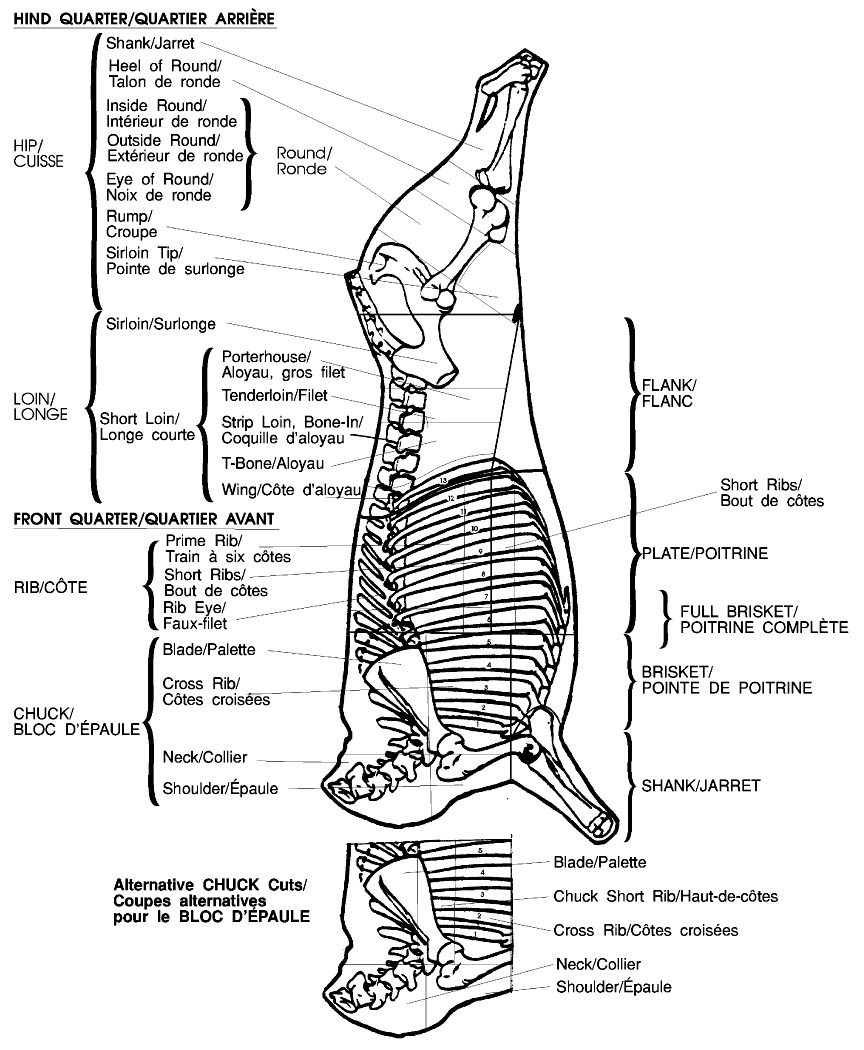
Description of photograph – Diagram of meat cuts of a beef
This diagram shows the meat cuts from a slice of beef. The hind quarter consists of the hip, the loin and the flank.
- The hip consists of the following cuts:
- shank
- heel of round
- round – which consists of inside round, exterior round, center of circular
- rump
- siroin tip
- The loin consists of the following cuts:
- sirloin
- short loin – which consists of porterhouse, tenderloin, strip loin, T-os, and wing
- The front quarter consists of rib, chuck, shank, brisket, total brisket, and plate.
- The rib consists of the following cuts:
- prime rib
- curt ribs
- rib middle
- The chuck consists of the following cuts:
- bract
- cantankerous rib
- neck
- shoulder
- The plate consists of curt ribs.
- Culling chuck cuts consist of the following:
- blade
- chuck curt rib
- neck
- shoulder
Beef – Skeletal diagram
Click on image for larger view
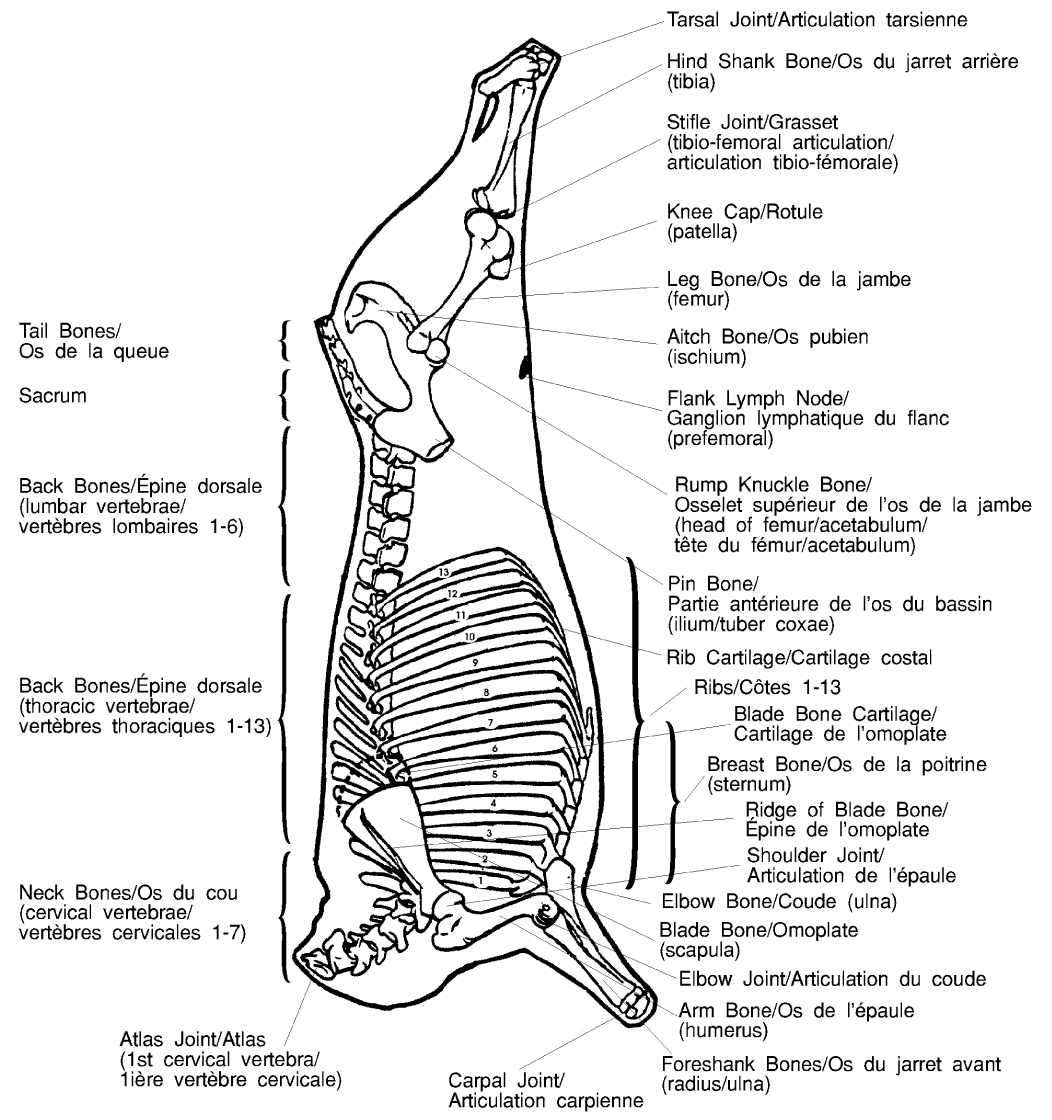
Clarification of photo – Diagram of meat cuts – Beef skeletal diagram
This diagram shows the skeletal view of a piece of beefiness.
The beef consists of:
- tail basic
- sacrum
- dorsum bones (lumbar vertebrae 1-half-dozen)
- dorsum bones (thoracic vertebrae 1-xiii)
- neck bones (cervical vertebrae)
- atlas (1st cervical vertebra)
- carpal articulation
- foreshank bones (radius/ulna)
- arm bone (humerus)
- elbow joint
- bract bone (scapula)
- elbow bone (ulna)
- shoulder joint
- ridge of bract bone
- breast bone (sternum)
- blade bone cartilage
- ribs ane-13
- rib cartilage
- pin bone (ilium)
- rump knuckle bone (head of femur/acetabulum)
- flank lymph node (prefemoral)
- aitch bone (ischium)
- leg bone (femur)
- knee cap (patella)
- stifle joint (tibio-femoral joint)
- hind shank bone (tibia)
- tarsal joint
Meat cut nomenclature and description
- Beefiness: is meat derived from dressed carcasses of bovine animals having a warm weight of 160 kg or more. It may be derived from male person or female animals or from steers.
- Dressed beef carcass: ways a beefiness carcass from which the skin, head, adult mammary glands and the feet at the carpal and tarsal joints have been removed and the carcass has been eviscerated and split.
- Beef side: means one (1) of the two (ii) approximately equal portions of a dressed beef carcass obtained by cutting from the tail to the neck along the median line.
- Front end quarter: ways the anterior portion of the beefiness side which is separated from the hind quarter past a cut passing betwixt the twelfth and 13th rib.
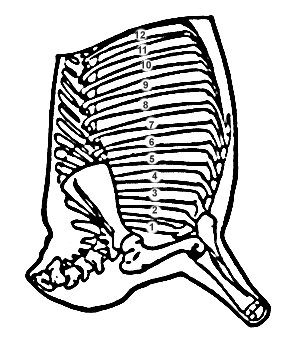
4.1 Chuck (foursquare-cutting chuck): means that portion of the front quarter which is separated from the rib, plate, brisket and shank by ii (2) straight cuts at right bending to each other. The commencement cut passes between the fifth and 6th rib and separates the chuck, brisket and shank from the rib and plate. The second cut passes at a point slightly above (dorsal to) the elbow articulation (distal extremity of the humerus) and through the cartilaginous juncture of the first (1st) rib and sternum, and separates the chuck from the brisket and shank.
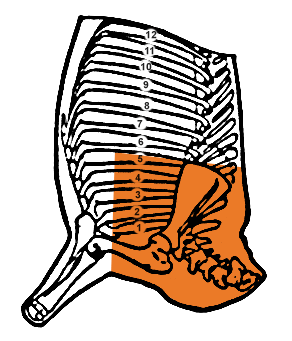
4.1.1 Shoulder clod: means that large musculus mass of the chuck which lies outside (lateral side) of the bract bone and ventral to the ridge of the blade bone extending from the shoulder joint to the tip of the blade bone cartilage. It is obtained past two (two) main straight cuts approximately parallel to each other. The offset cut passes along the ventral side of the ridge of the bract os and the other over the ribs.
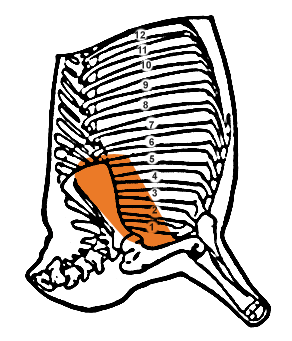
iv.1.1.ane Acme blade: means the portion of the shoulder clod including the muscles infraspinatus, triceps brachii and deltoideus found exterior (lateral side) of the bract os (scapula).
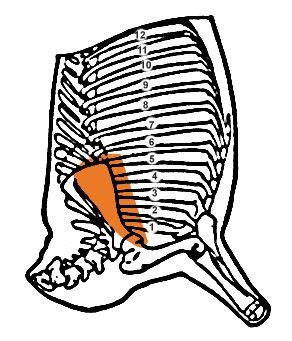
4.i.1.2 Top blade portion: ways that circular shaped muscle (supraspiratus) of the bract which lies outside (lateral of side) of the bract os (scapula) and dorsal to the ridge of the blade bone or the infraspiratus musculus which lies outside of the blade bone and ventral to the ridge of the blade bone. They are separated from the blade bone and adjacent muscles through natural seams.
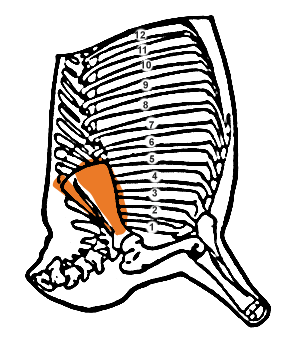
four.1.2 Bract: means that portion of the chuck which is separated from the cervix, cross rib and shoulder past two (ii) straight cuts at right angles to each other. The first cutting passes at a bespeak slightly in front of (inductive to) the shoulder articulation and the inductive tip of the blade bone (scapula) thereby separating the neck and shoulder from the blade and cross rib. The second cutting passes through the interior edge of the seventh (7th) cervix bone (cervical vertebra) and through the blade os (scapula) separating the neck from the shoulder and the blade from the cross-rib.
Note: The bract may contain small portions of the fifth and 6th cervix bones (cervical vertebrae).
4.ane.2.ane Bottom blade (inside blade): means the portion of the blade located inside (medial side) of the blade bone (scapula) including the muscles teres major, subscapularis and serratus ventralis.
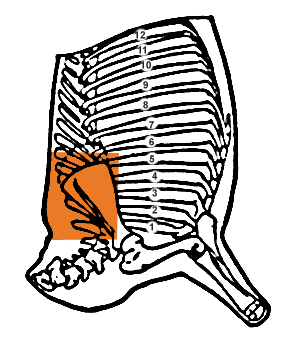
4.1.iii Neck: means that portion of the chuck that is separated from the blade, cross rib and shoulder as described in item 4.1.1.
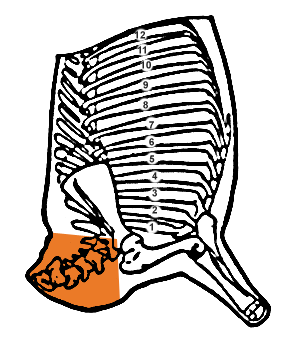
4.ane.iv Cross rib: means that portion of the chuck which is separated from the blade, cervix and shoulder as described in detail iv.one.1.
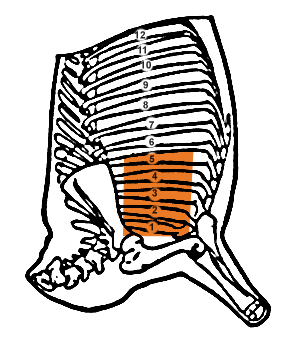
4.i.five Shoulder: means that portion of the chuck which is separated from the cross rib, blade and cervix as described in item iv.1.1.

4.ane.half-dozen Chuck short rib: is an alternative portion of the chuck. Information technology is separated from the neck and shoulder as described in item iv.1.1 and from the bract past a straight cut passing on the superior edge of the body of the seventh neck bone (cervical vertebra) and through the center of the blade bone (scapula) and from the cross rib past a straight cut passing beneath (ventral to) the inductive tip of the blade os (scapula) and in proximity to the shoulder joint.
Note: The blade and cantankerous rib portions resulting from the removal of the chuck short rib are alternative portions of the chuck.
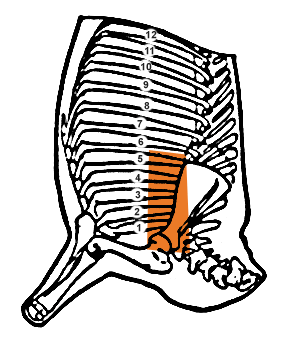
iv.2 Rib (key rib): means that portion of the forepart quarter which is separated from the chuck and brisket by a straight cut passing betwixt the fifth and sixth rib and from the plate by a straight cut passing across the ribs at right angles to the first cut at a betoken slightly below (ventral to) the middle of the rib cage.
Note: This cut includes seven (7) ribs (6th to 12th inclusive) and may contain a small portion of the blade os (scapula) and cartilage. It should not be dislocated with prime number rib, which includes six ribs (7th to 12th).
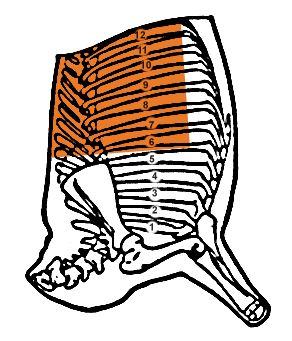
four.2.i Rib eye: means that boneless portion of the rib containing the big round-shaped muscle (longissimus dorsi) located at the vertebral stop of the ribs. It may contain the closely adjacent muscle, spinalis dorsi.
Annotation: The term boneless rib should be used if any other muscles are present.
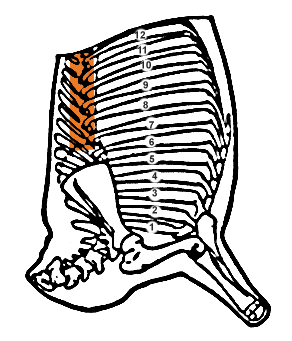
4.two.2 Curt ribs (brusk braising ribs): is the rib cease portion of the rib and plate obtained by making a straight cut parallel and adjacent to the cut which separates the rib from the plate.
Annotation: Short ribs incorporate no rib cartilage (costal cartilage).
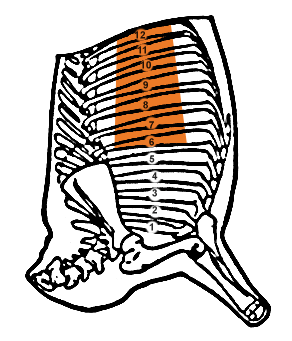
four.two.three Prime rib: is an alternative portion of the rib and refers to the portion containing the posterior vi (vi) ribs (seventh to 12th inclusive).
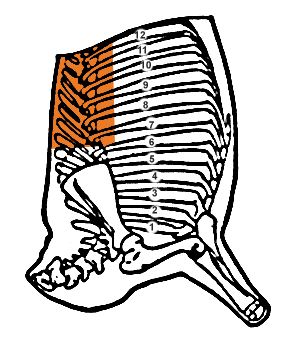
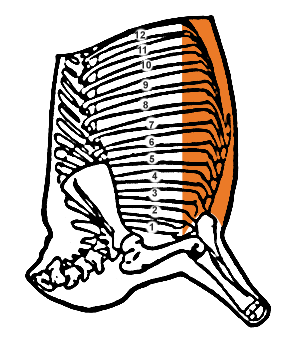
four.3 Plate: means that portion of the front quarter which is separated from the chuck and brisket by a straight cutting passing between the fifth and sixth rib and from the rib by a straight cut passing across the ribs at right angles to the offset cut at a bespeak slightly below (ventral to) the heart of the rib cage.
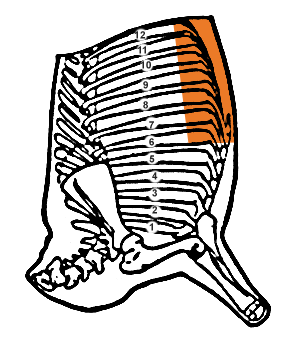
4.four Brisket (brisket point): means that portion of the front quarter which is separated from the plate past a straight cut passing between the fifth and sixth rib, from the chuck by a cutting at a right angle to the starting time cutting passing at a point slightly above (dorsal to) the elbow joint (distal extremity of the humerus) and from the shank by a cut which follows the natural contour of the elbow os (olecranon process of the ulna).
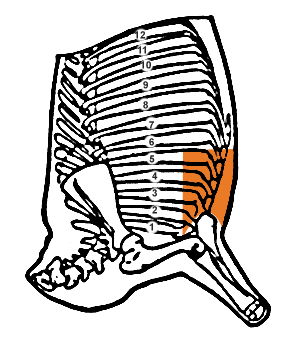
4.5 Total brisket (total plate): refers to the portion containing both the brisket and plate.
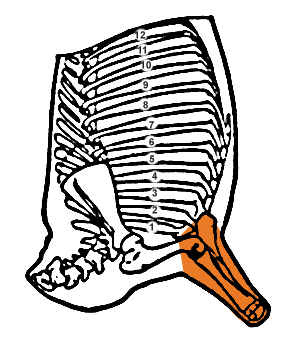
4.half dozen Shank (foreshank): means that portion of the front quarter which is separated from the chuck by a cutting passing at a point slightly higher up (dorsal to) the elbow joint (distal extremity of the humerus) and from the brisket by a cut which follows the natural seam of the elbow os (olecranon process of the ulna).
5. Hind quarter: ways the posterior portion of the beef side which is separated from the front end quarter past a cut passing between the 12th and 13th rib.
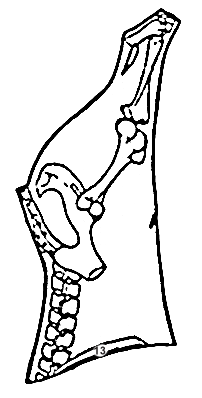
5.one Flank: ways that portion of the hind quarter which is separated from the loin by a straight cut passing approximately parallel to the lumbar dorsum basic (lumbar vertebrae) beginning in close proximity to or through the flank lymph node (prefemoral) and from the plate by a cutting passing between the twelfth and 13th rib and cartilage.
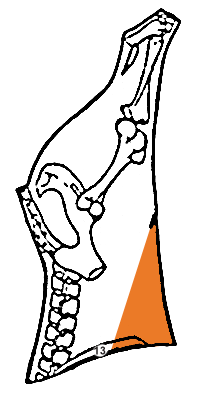
5.2 Loin (long loin): means that portion of the hind quarter which is separated from the flank as described in item 5.one, from the sirloin tip (see 5.3.five) and from the hip by a cut which passes in front end of (anterior to) the rump knuckle bone (head of the femur/acetabulum) thereby cut the pelvic os (os coxae) into approximately 2 equal parts.
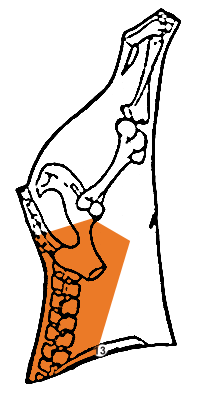
5.2.1 Short loin: means the anterior portion of the loin which is separated from the sirloin by straight cut which passes at a point immediately in front of (inductive to) the pin os (ilium or tuber coxae).
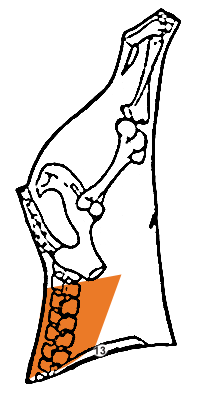
5.2.i.1 Porterhouse: means that portion of the short loin which is separated from the T-bone past a direct cut passing immediately in front of (anterior to) the tip of the gluteus medius muscle and approximately through the middle of the body of the fourth lumbar vertebra.
Note: Porterhouse may also be referred to every bit T-os, nonetheless T-os, every bit described, may not be referred to equally porterhouse.
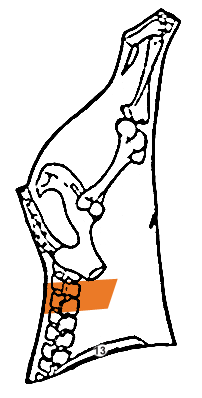
5.ii.1.2 T-bone: ways that portion of the brusk loin which is separated from the porterhouse as described in item five.2.i.1, and from the wing by a cut passing approximately through the middle of the body of the 1st lumbar vertebra and along the back (posterior) side of the concluding rib (13th rib).
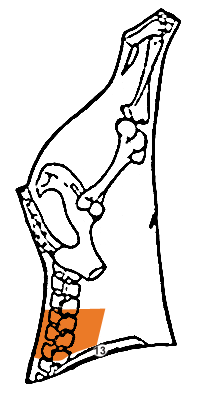
5.ii.one.3 Wing: means that portion of the short loin which is separated from the T-os as described in particular 5.2.1.two. It includes the 13th rib or part thereof.
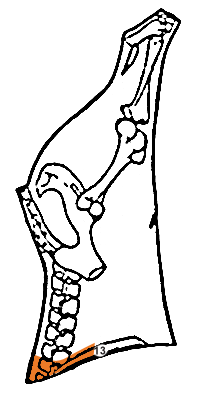
5.2.1.4 Tenderloin: ways the cylindrically shaped main muscle (psoas major and minor) located on the inside (ventral side) of the loin.
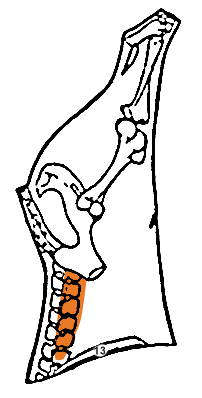
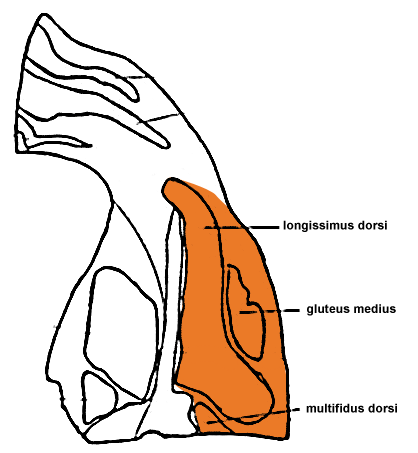
5.ii.1.5 Strip loin, os-in (vanquish loin): means that portion of the short loin from which the tenderloin has been removed. Information technology contains portions of the abdominal muscles: obliquus abdominis externus; obliquus abdominis internus; transversus abdominis and loin muscles; gluteus medius; longissimus dorsi; and multifidus dorsi, or portions thereof.
Click on epitome for larger view
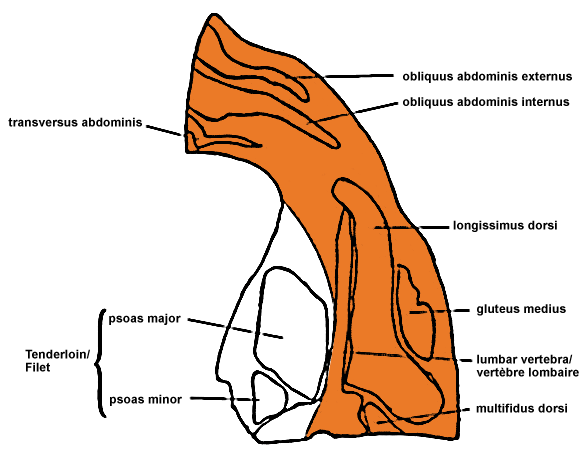
Clarification of photograph – Diagram of the cross-section of a loin
This diagram shows the cantankerous-department of a loin.
The cross-section of a loin consists of:
- transversus abdominis
- tenderloin – which consists of psoas major and psoas pocket-size
- multifidus dorsi
- lumbar vertebra
- gluteus medius
- longissimus dorsi
- obliquus abdominis internus
- obliquus abdominis externus
five.2.i.vi Strip loin: ways that portion of the short loin from which the tenderloin and bones accept been removed. It contains three (3) muscles: gluteus medius; longissimus dorsi; and multifidus dorsi, or portions thereof.
5.2.2 Sirloin: means the posterior portion of the loin which is separated from the short loin by a straight cut which passes at a point immediately in front of (anterior to) the pin bone (ilium or tuber coxae).
5.2.ii.1 Sirloin, tenderloin removed: means the sirloin from which the tenderloin is removed.
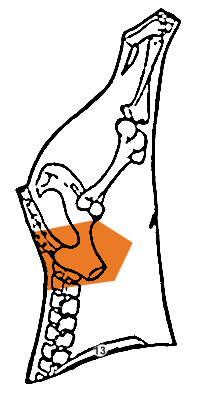
5.2.ii.two Meridian sirloin: means the dorsal portion of the sirloin which includes the gluteus medius and may include the biceps femoris.
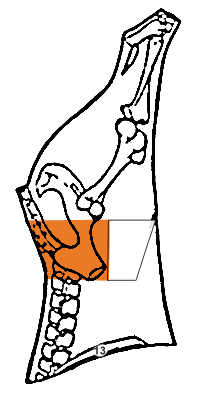
5.2.2.3 Top sirloin, cap removed (height sirloin portion): ways the elevation sirloin from which the biceps femoris is removed.
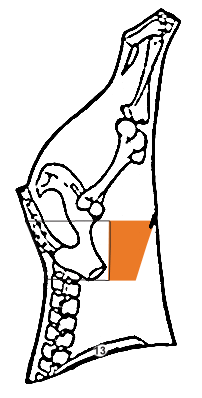
v.2.ii.4 Bottom sirloin: means the ventral portion of the sirloin which includes the musculus tensor fasciae latae.
five.3 Hip: means that portion of the hind quarter which is separated from the loin by a straight cut which passes in front end of (inductive to) the rump knuckle bone (head of the femur/acetabulum) thereby cutting the pelvic bone (os coxae) into approximately two (ii) equal parts.
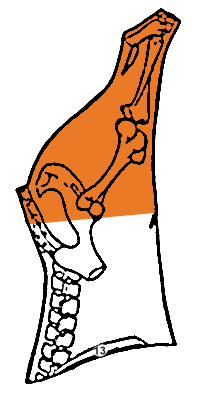
5.3.1 Rump: ways that portion of the hip which is separated from the round by a straight cut passing approximately parallel and in proximity to the aitch os (ischium) leaving no portion of the aitch bone (ischium) in the round.
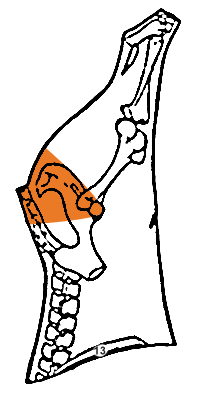
5.three.2 Circular (full circular): means that portion of the hip which is separated from the rump as described in item five.3.1, from the sirloin tip by a straight cut which passes at a point in front of (inductive to) the shaft of the leg bone (femur) and from the heel of round by a straight cut which passes through the base of the shaft of the leg bone (distal extremity of the femur). The cut may extend into the rump.
Note: The round contains no office of the gastrocnemius muscle.
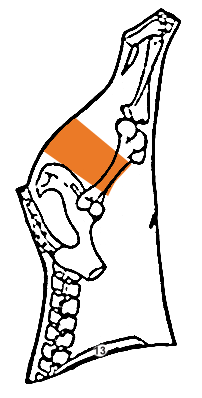
v.3.2.1 Inside circular: means that boneless portion of the round located inside (medial side) of the leg, which is separated from the outside circular by cutting lengthwise along the natural seam. The cutting may extend into the rump. It contains four (4) muscles, namely: pectineus, adductor, gracilis and semimembranosus.

Description of photo – Diagram of a cross-section of an inside round
This diagram shows the cantankerous-section of an inside circular.
The cross-department of an inside round consists of:
- femur
- pectineus
- gracilis
- adductor
- semimembranosus
5.3.ii.2 Outside round: means that boneless portion of the circular located outside (lateral side) of the leg, which is separated from the inside round as described. The cut may extend into the rump. It contains three (3) main muscles, namely: vastus lateralis, biceps femoris and semitendinosus. Information technology may exclude the eye of circular (semitendinosus).
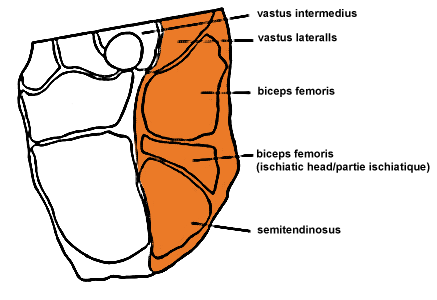
Description of photo – Diagram of a cantankerous-section of an exterior circular
This diagram shows the cross-section of an outside round.
The cantankerous-section of an outside round consists of:
- vastus intermedius
- vastus lateralis
- biceps femoris
- beceps femoris (ischiatic head)
- semitendinosus
5.three.2.3 Eye of circular: means the round shaped muscle (semitendinosus) establish at the outer (posterior) extremity of the outside round and extends into the rump.
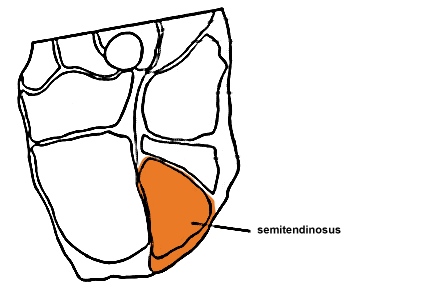
5.3.2.4 Round, eye removed: means a full round excluding the center of round.

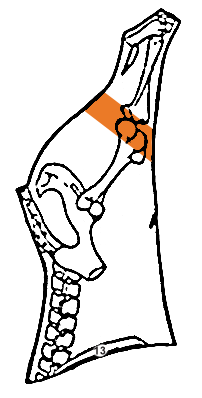
v.3.3 Heel of round: ways that portion of the hip which is separated from the round by a straight cut which passes through the base of the shaft of the leg bone (distal extremity of the femur) and from the shank by a straight cut passing through the stifle joint (tibio-femoral joint).
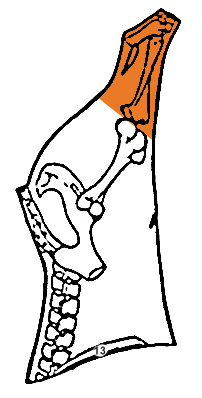
v.3.four Shank (hind shank): means that portion of the hip which is separated from the heel of round past a direct cutting passing through the stifle joint (tibio-femoral articulation).
5.iii.5 Sirloin tip: means that portion of the hip obtained by a "V-shaped" cutting beginning approximately at the knee cap (patella) following the full length of the leg bone (femur) upwardly to the vicinity of the rump knuckle os (head of femur/acetabulum) then towards the flank lymph node (prefemoral). It contains three (3) principal muscles, namely: vastus lateralis, rectus femoris and vastus medialis.
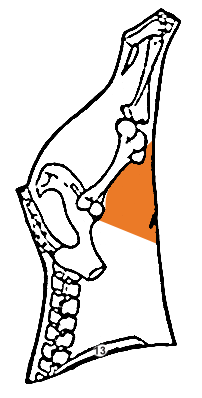
5.three.5.i Center of sirloin tip: means the triangular-shaped muscle (vastus lateralis) located outside (lateral side) of the sirloin tip.
5.3.5.2 Sirloin tip, middle removed: means the sirloin tip excluding the eye of sirloin tip.
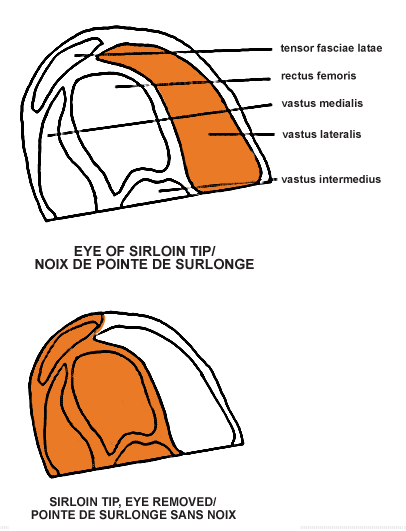
Description of photograph – Diagram of a cantankerous-department of a sirloin tip
This diagram shows the cross-department of a sirloin tip.
The cross-section of a sirloin tip consists of:
- tensor fasciae latae
- rectus femoris
- vastus medialis
- vastus lateralis
- vastus intermedius
Diverseness meats
- Brain / Cervelle
- Heart / Coeur
- Kidney / Rognon
- Liver / Foie
- Tail / Queue
- Tongue / Langue
- Tripe / Tripe
- Suet / Suif
- Sweetbread / Ris
Suet: means fresh fatty tissue obtained from the omentum and kidney region of a dressed beef carcass.
List of meat cut modifiers
- Bone in / De coquille
- Boneless / Désossé
- Butterfly (ied) / Papillon
- Cap removed / Paré
- Delicatize(d) / Attendri(re) mécaniquement
- Diced Beefiness / Boeuf en cubes
- Kabob / Brochette
- Medallion / Médaillon
- Infinitesimal steak / Bifteck minute
- Portion / Partie du
- Pot roast / Morceau à braiser
- Roast beefiness / Rosbif
- Rolled / Roulé
- Semi-boneless / Semi-désossé
- Steak / Bifteck, steak, tranche
- Stewing beef / Boeuf à ragoût
- Tenderize(d) / Attendri(re)
- Tied / Ficelé
- Tournedos / Tournedos
- Trimmed / Paré
Note: While non required, these modifiers may be used to draw beefiness cuts provided they are informative and not misleading.
- Appointment modified:
hernandezlaticureelit.blogspot.com
Source: https://inspection.canada.ca/food-label-requirements/labelling/industry/meat-and-poultry-products/meat-cuts/beef/eng/1348582373896/1348589471777?wbdisable=true
0 Response to "Bone in Beef How to Cut"
Yorum Gönder