In an Excavation What Do Plan and Section Drawings Provide
Architects use drawings every bit a medium of communicating the pattern to the client or any related private involved in constructing a project. For a project to exist constructed, a final building contract, detailed specifications, and a sure set of working drawings is required, and this set of drawings is referred to every bit blueprints besides. These documents are vital for building construction processes.
The set of drawings in a working set is provided in a way such that it corresponds to the building execution phases and procedure.
Listing of Drawings that are usually included in a working cartoon prepare are as follows:
Working Drawing required:
- Title and Legend Sheet
- ARCHITECTURAL DRAWINGS
- Setting out Plan
- Centreline Plans
- Floor Plans (Detailed with grid Dimensions i.east. Centreline Markings)
- Sections and Details
- Elevations and End Details
- Opening Schedules
- STRUCTURAL DRAWINGS
- Trench Plan or Excavation Plan (according to Centreline Markings on Site)
- Foundation Plan
- Column Layouts
- Plinth Beam Layouts
- Roof Axle and Slab Layouts
- Consultant DRAWINGS
- Mechanical Drawing
- Electrical Drawings
- Plumbing Drawings
- Fire Rubber Drawings
All of the above are essential for the completion of a project according to the designed concept idea with a scheduled projection budget and estimations.
A brief description of each of the mentioned cartoon is equally follows:
i. Title and Legend Sheet
- It is required for the Introduction of the Project
- Information technology includes a Design Proposal Title with a Schematic View or Elevation depicting the design by the architect
- It accommodates an index of all included drawings with the Designated Serial Number
ii. Architectural Drawings
ii.1 Setting Out Plan
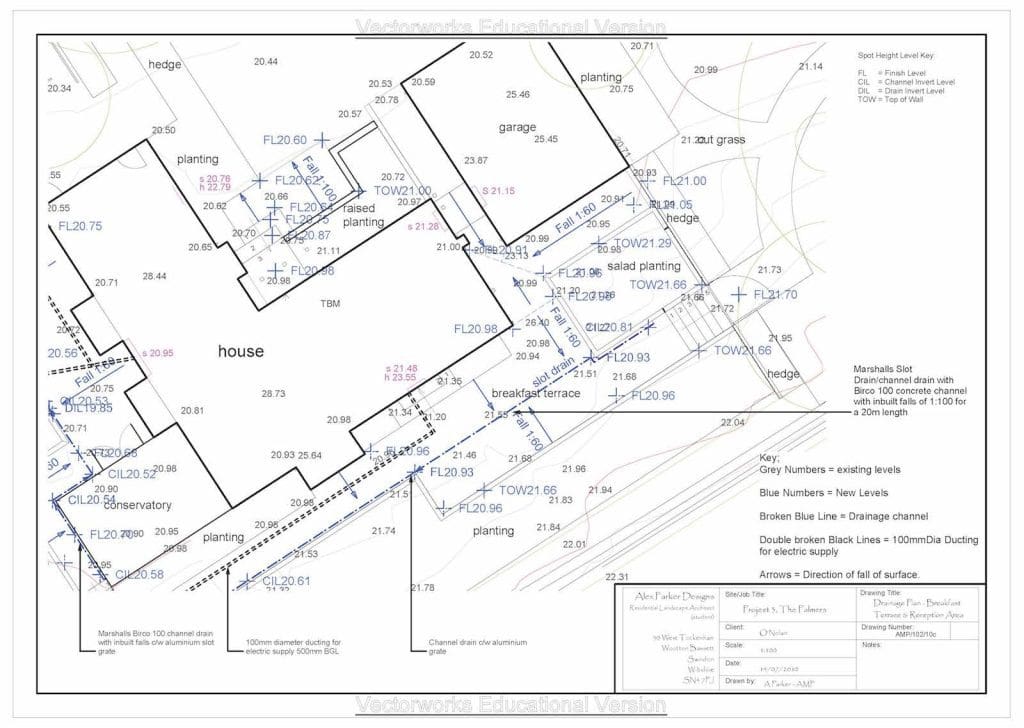
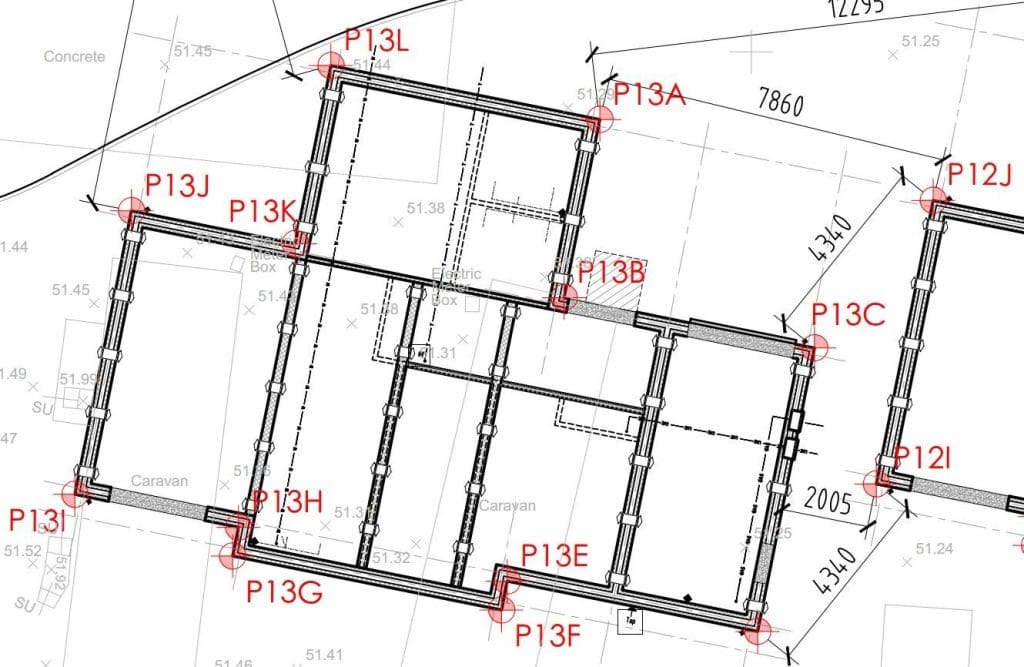
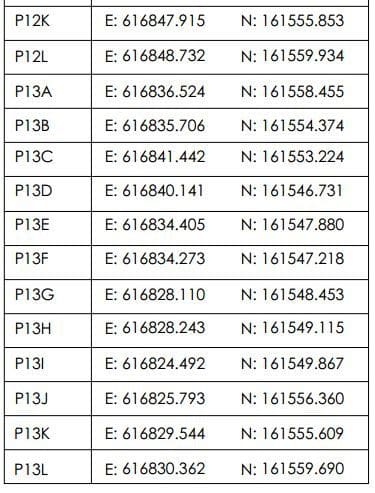
- These Plans include site layout proposal with congenital structure and its positioning according to references of markings or filigree layout marked on the Site.
- It is used for marking the position and orientation of the structure co-ordinate to the description provided by the architect.
- Reference point to initiate the construction are inferred from Setting out programme, Surface level markings are depicted on it (Mostly, Footing level beingness ±00 level for reference)
two.2 Centerline Plans
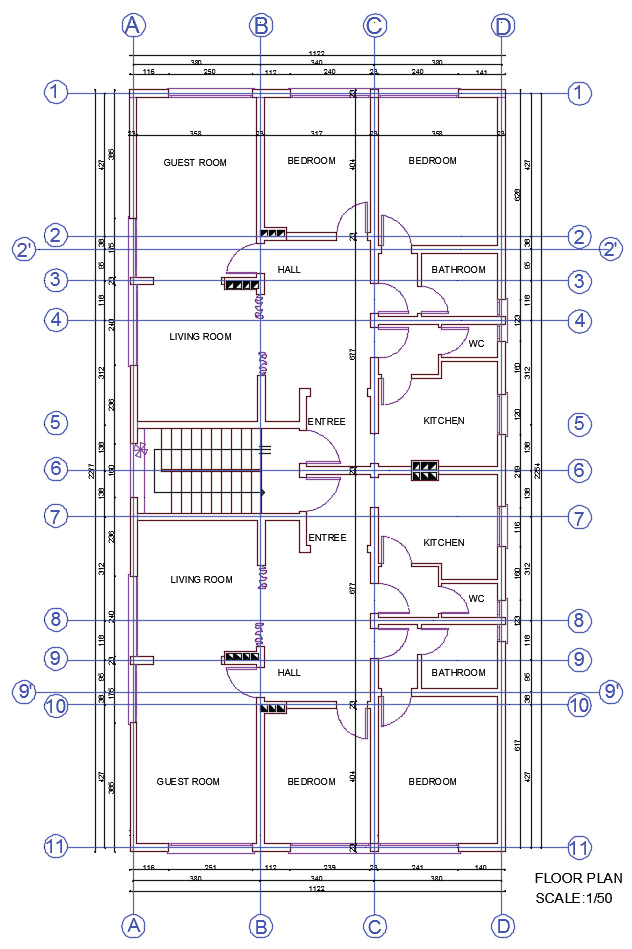
- Centrelines are grids that mark the positioning of whatsoever structural or non-structural chemical element on-site nigh a coordinate on the grid.
(Equally shown in image, Vertical Axes are depicted through Alphabet Notations and Horizontal Axes are depicted through Number Notations, plotting both of these together forms a Grid.)
- Centrelines are depicted as Dash-Curt Dashed line-type in drawings.
- It passes through the center or in the alignment of a cavalcade, or wall, or any demarked chemical element to reference its position according to the grid as shown.
- Centreline Plans are used to generalise a common filigree reference for all type of related construction works.
2.iii Floor Plans
- These blueprints depict the architect's design equally a scaled cartoon showing a view from above through an imaginary horizontal exclusive plane.
- Architectural floor plans are provided for structure of elements (walls, columns, trenches, etc) through markings and detailed dimensional altitude from them concerning the Centreline filigree as shown in image.
- These plans also include reference markings of any item that requires whatever certain specification co-ordinate to design. These specific details are separately shown for improve readability and emphasis.
2.4 Sections and Details
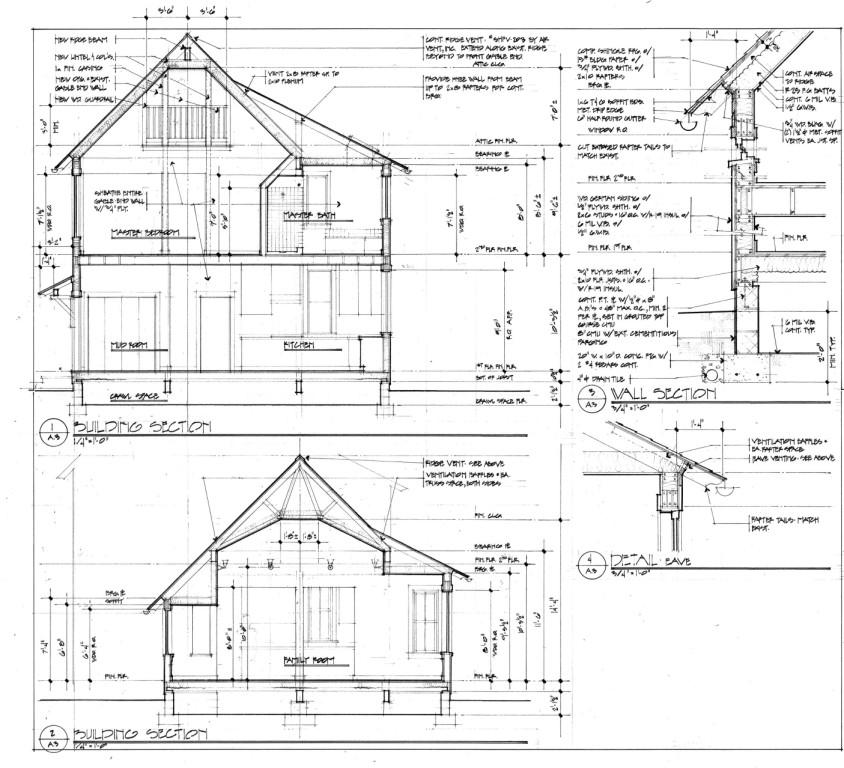
- Sections are drawings depicting vertical sectional aeroplane projections of the edifice showing its Interior and Exterior profiles and vertical dimensions of elements.
- Diverse forms of depiction of cloth, techniques, heights and openings are emphasized through lines and graphic conventions in Sections.
- Smaller still Important Details are scheduled as Part-Department Details or Blow-up Details every bit shown in image (Wall Section Detail and Eave Particular).
2.v Elevation and Finish Details
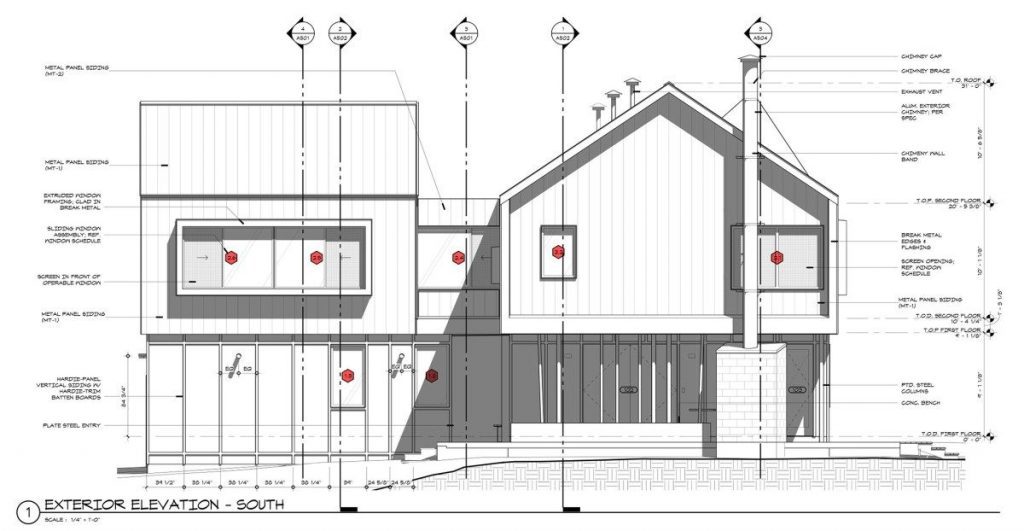
- Pattern Resultant of a building in architectural drawings is depicted through Elevations.
- Elevations are referential for the contractor or building to keep a check on how the building should shape afterwards completion.
- These include Details like Finishes, Material Depiction through Graphical Notations, and Spot Tiptop markings i.e. Level of Depth in a plane where the uttermost plane is marked as ±00 level.
2.6 Opening Schedules
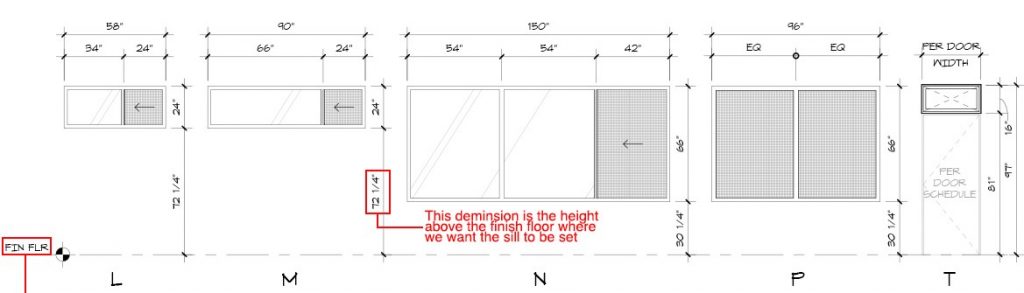
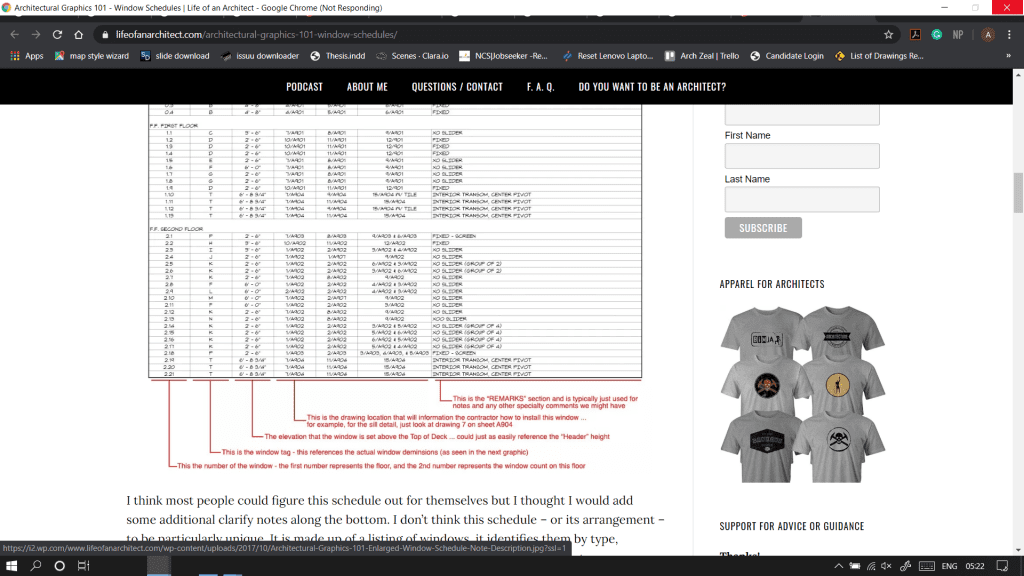
- Door-Window Schedules are a way of presenting complicated details of different doors and windows.
- Information technology tabulates private sizes, dimensions, and typologies of fenestration covering specified every bit per design.
- Details like Number, Material, Color and finish, Hinges and accessories, Burn down Rating, Acoustic Rating and other remarks are supposed to exist added in an Opening Schedule.
3. Structural Drawings
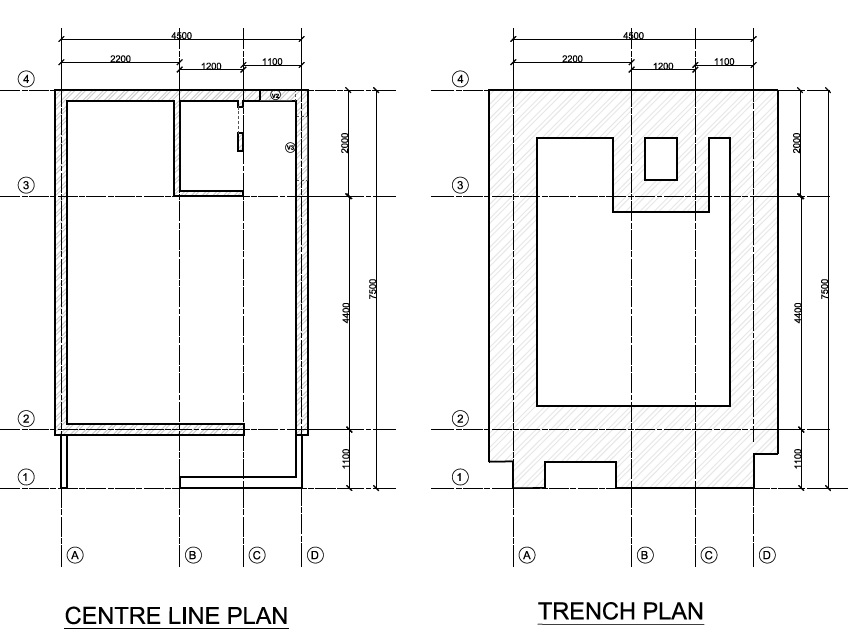
3.i Earthworks Plan or Trench Plan
- On-site excavations or execution of Trenches for Sub-Structure of the building requires a plan where all the trenches are marked according to Grid of centreline markings and the offsets of dimensions respectively.
- Trench Programme highlights the dimensions (Length, Latitude, Depth) of trenches to be to excavated with reference to Centreline Grid.
- It is required at an early stage, immediately afterward marking Centreline on-Site.
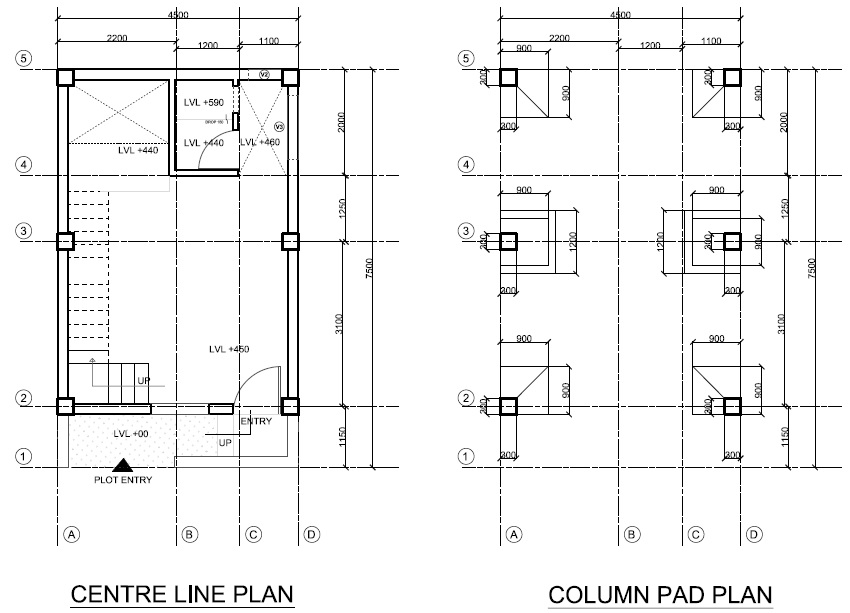
three.2 Foundation Programme
- Structural drawing which has foundation notations with the dimensions (Length, Breadth, Thickness) of the column pad concerning the column placement according to the Centreline Grid markings.
- It likewise suggests the typology of the foundation to be used with whatever discreet specifications.
- Foundations are identified individually co-ordinate to the coordinate on centreline grid every bit shown.
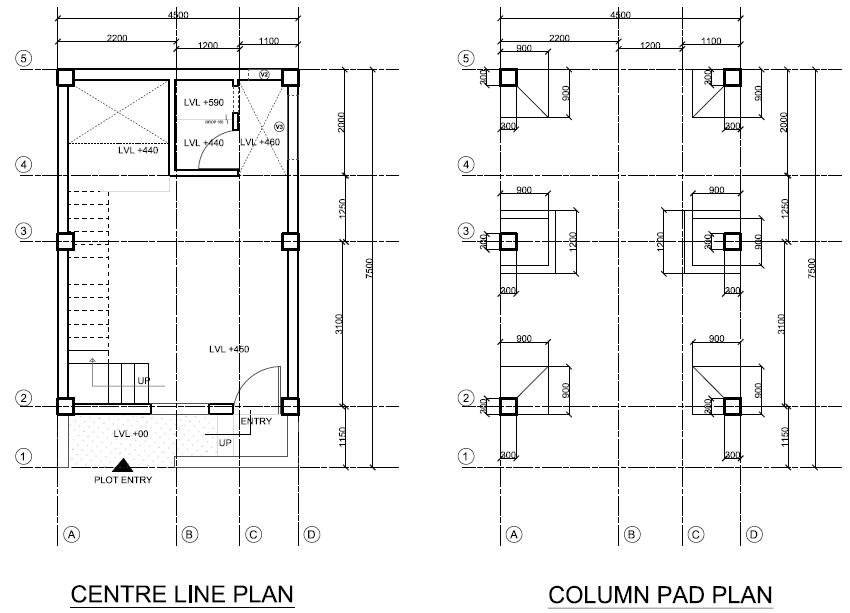
3.3 Coloumn Layout Plan
- Column Layouts are used for erecting columns on site equally per project design
- These are referred onto the site for marking column placement, size and specifications of details of the column design.
- Any column on the layout has a sure Grid Coordinate on Centreline Filigree that is used as its Column Nomenclature.
3.four Plinth Beam Layout
- Information technology is used for marking the Tie beam (Main element for 'Earthquake Resistant Structure') which is used for connecting the columns emerging from the Sub-Construction (structure below the ground level) of the edifice.
- This layout gives the orientation of the Tie Axle to the column and also the Cantankerous-section sizes with specifications of the design.
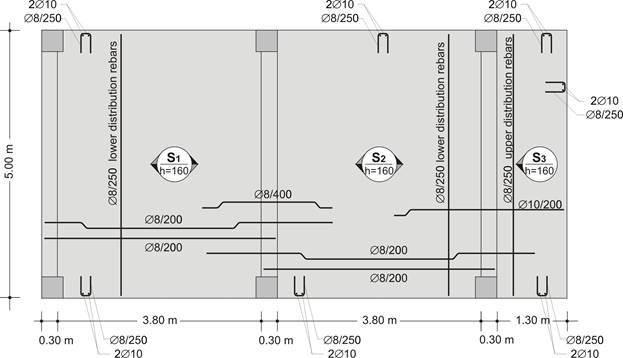
3.5 Roof, beam and Slab Layout
- Information technology includes the layout of roof slabs concerning the corresponding beam by the Centreline Grid Markings of Columns-Beams.
- This involves the orientation of the roof slab and Reinforcement Bar Details to be incorporated co-ordinate to Structural Blueprint.
- Details similar diameter and number of reinforcement bars in a divers length are mentioned in roof slab layout for structural stability.
4. Consultant Drawings
These drawings are referential blueprints for the consultant's advice for the allocation of the services to be incorporated. A general term of M.E.P.F. (Mechanical, Electrical, Plumbing, and Burn down Safety) Drawings is used for consultant drawings.
Normally Consultant drawings are prepared for Architect projects and not for Private houses.
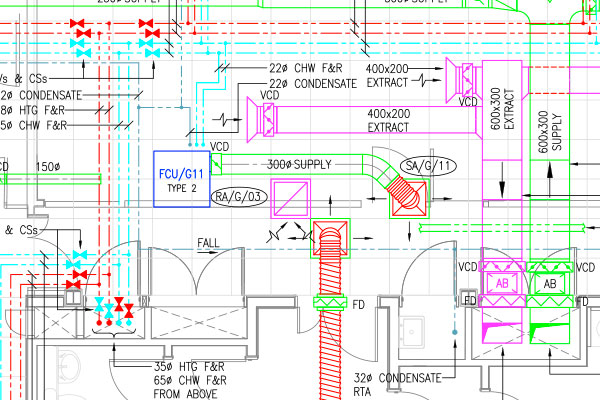
4.one Mechanical Drawings
- Information technology includes H.5.A.C. (Heating, Ventilation and Air conditioning) layouts, Equipment Schedules and Installation Details suggested by a consultant.
- Location of Shafts/ Mechanical Ducts for Air conditioning purposes, Equipments and connections are traced over each floor plan.
- It besides marks the notations of Supply Inlets, Exchanging Outlets, and Extraction Shafts sizes and dimensions with rate of menses of exchange of Air Menses.
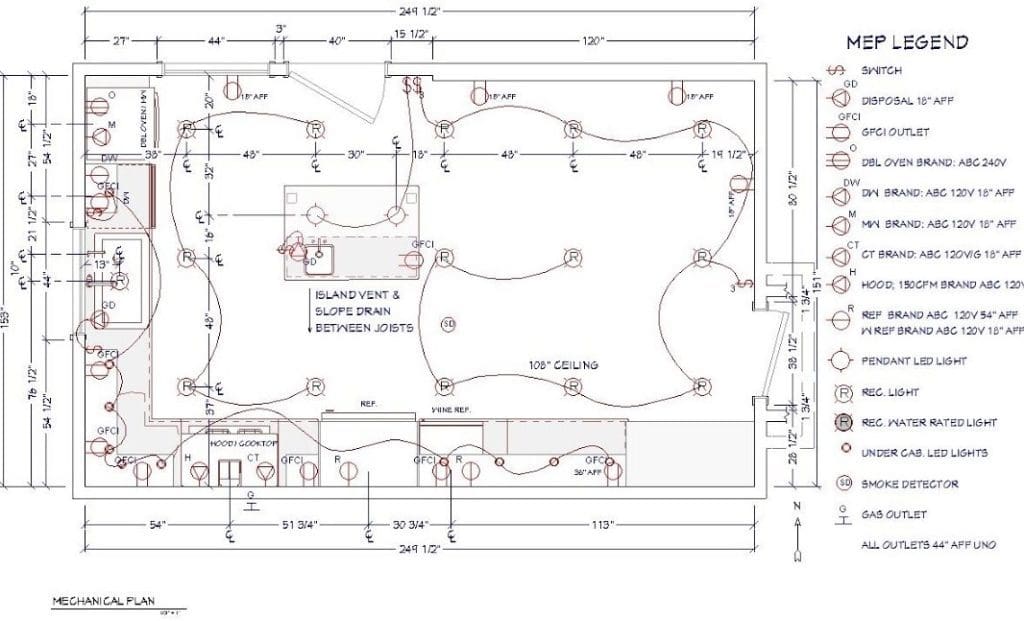
4.2 Electrical Drawings
- General Symbols, notations and details are mentioned as a dissever legend for reference.
- Major inclusions are Electrical Legend, Lighting Plans, Wiring Plans and Details, Equivalency Chart, Switch-Equipment Legend.
- These Drawings represent equipment/appliance positions, Switch-Board locations through referential grid and detailed dimensions in the layout of the building.
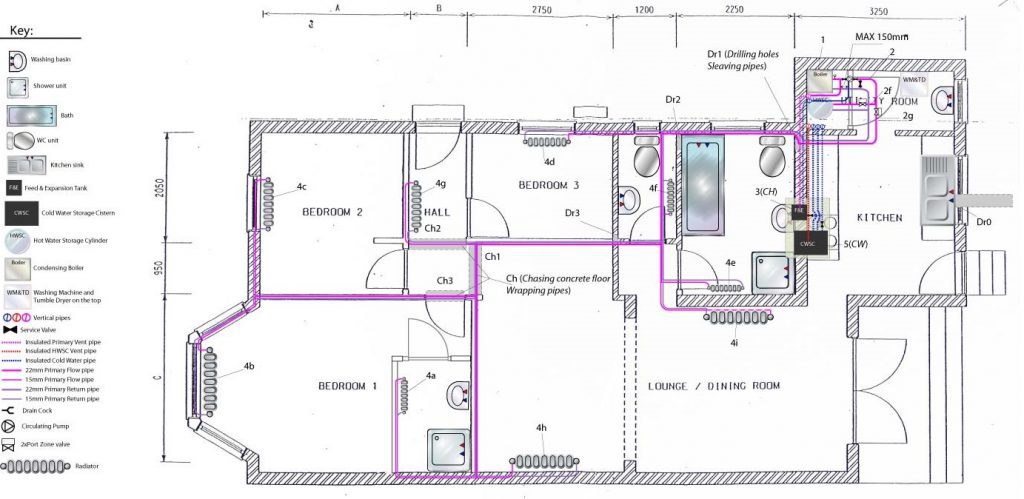
4.3 Plumbing Drawings
Plumbing Plans include the following:
- Plumbing Schedule: List of Plumbing fixtures with sizes, number, Brand, Typology etc.
- Constructional Details depicting fixing positions with dimensions with reference to wall planes.
- Water Supply Layout: Inlet and Outlet pipes of various fixtures depicting water period and slopes.
- Manhole Schedule and Layout: Manhole position with nomenclature and sizes.
- Sewerage Management Plan: Plans depicting pipelines for belch management with sizes and gradient of inclination of pipes.
- Rainwater Layout Plan: drawings depicting rainwater discharge management/harvesting from roof planes to underground level.
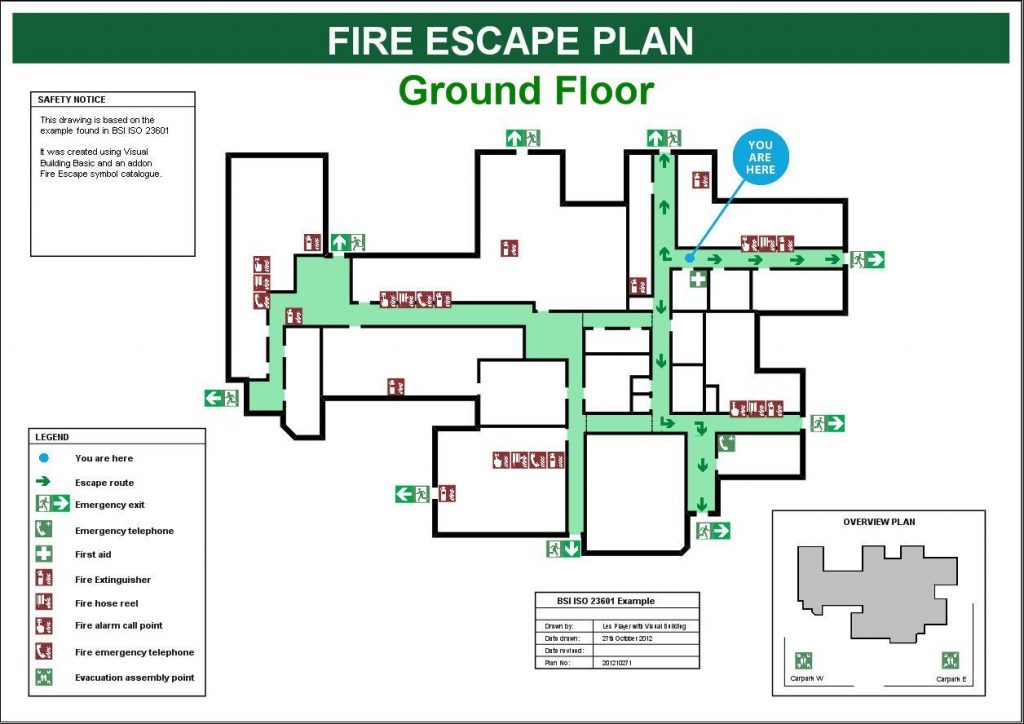
4.iv Fire Safety Drawings
- Plans for burn Safety Schedule include Fire fighting Layout Plans for each floor.
- Installation Spots for Sprinklers, Burn Hoses, Fire Exits, and Signage are marked within the limit of Fire Safety Code.
- Evacuation routes with direction Signage Locations are added into corresponding floor plans.
hernandezlaticureelit.blogspot.com
Source: https://happho.com/working-drawings-required-for-house-construction-project/
0 Response to "In an Excavation What Do Plan and Section Drawings Provide"
Yorum Gönder