Modern Day Saints Lets Start Again

In religious belief, a saint is a person who is recognized as having an exceptional degree of holiness, likeness, or closeness to God. Still, the utilise of the term saint depends on the context and denomination. In Catholic, Eastern Orthodox, Anglican, Oriental Orthodox, and Lutheran doctrine, all of their faithful deceased in Heaven are considered to be saints, but some are considered worthy of greater honor or emulation.[one] Official ecclesiastical recognition, and consequently a public cult of veneration, is conferred on some denominational saints through the process of canonization in the Cosmic Church building or glorification in the Eastern Orthodox Church after their approving.[two]
While the English word saint originated in Christianity, historians of religion now employ the appellation "in a more than general fashion to refer to the land of special holiness that many religions attribute to certain people", referring to the Jewish tzadik, the Islamic walī, the Hindu rishi or Sikh guru, the Shintoist kami, the Taoist shengren, and the Buddhist arhat or bodhisattva also as saints.[iii] [iv] Depending on the religion, saints are recognized either by official ecclesiastical annunciation, every bit in the Catholic religion, or by popular acclamation (meet folk saint).[5]
Full general characteristics [edit]
The English language word saint comes from the Latin sanctus, with the Greek equivalent being ἅγιος (hagios) 'holy'.[6] The give-and-take ἅγιος appears 229 times in the Greek New Testament, and its English translation 60 times in the corresponding text of the King James Version of the Bible.[7]
The discussion sanctus was originally a technical i in aboriginal Roman faith, but due to its globalized utilize in Christianity the modern word saint is now likewise used as a translation of comparable terms for persons "worthy of veneration for their holiness or sanctity" in other religions.
Many religions besides use similar concepts (but different terminology) to venerate persons worthy of some award.[three] Author John A. Coleman, SJ, of the Graduate Theological Spousal relationship, Berkeley, California, wrote that saints beyond diverse cultures and religions take the following family resemblances:[viii]
- exemplary model
- extraordinary teacher
- wonder worker or source of benevolent ability
- intercessor
- a life often refusing textile attachments or comforts
- possession of a special and revelatory relation to the holy.
The anthropologist Lawrence Babb in an article most Indian guru Sathya Sai Baba asks the question "Who is a saint?", and responds by saying that in the symbolic infrastructure of some religions, there is the image of a sure extraordinary spiritual king'south "miraculous powers", to whom frequently a certain moral presence is attributed. These saintly figures, he asserts, are "the focal points of spiritual force-fields". They exert "powerful attractive influence on followers only touch the inner lives of others in transforming means likewise".[nine]
Christianity [edit]
Catholic Church building [edit]

According to the Catholic Church, a saint is anyone in Sky, whether recognized on Earth or non, who form the "nifty cloud of witnesses" (Hebrews 12:ane).[10] [eleven] These "may include our own mothers, grandmothers or other loved ones (cf. 2 Tim 1:v)" who may take non e'er lived perfect lives, but "amid their faults and failings they kept moving forward and proved pleasing to the Lord".[ten] The championship Saint denotes a person who has been formally canonized—that is, officially and authoritatively declared a saint, past the Church as holder of the Keys of the Kingdom of Heaven, and is therefore believed to be in Heaven past the grace of God. There are many persons that the Church believes to be in Heaven who have not been formally canonized and who are otherwise titled saints because of the fame of their holiness.[12] Sometimes the discussion saint also denotes living Christians.[thirteen]
Co-ordinate to the Canon of the Catholic Church, "The patriarchs, prophets, and certain other Quondam Attestation figures have been and e'er volition be honored as saints in all the church's liturgical traditions."[xiv]
In his book Saint of the Solar day, editor Leonard Foley, OFM, says this: the "[Saints'] give up to God'south love was so generous an arroyo to the total surrender of Jesus that the Church recognizes them as heroes and heroines worthy to be held up for our inspiration. They remind us that the Church is holy, tin can never stop being holy and is called to bear witness the holiness of God by living the life of Christ."[15]
The Catholic Church teaches that it does not "make" or "create" saints, but rather recognizes them. Proofs of heroic virtue required in the process of beatification will serve to illustrate in detail the full general principles exposed above[16] upon proof of their holiness or likeness to God.
On 3 January 993, Pope John 15 became the starting time pope to proclaim a person a saint from exterior the diocese of Rome: on the petition of the German language ruler, he had canonized Bishop Ulrich of Augsburg. Before that time, the pop "cults", or venerations, of saints had been local and spontaneous and were confirmed by the local bishop.[17] Pope John 18 subsequently permitted a cult of five Polish martyrs.[17] Pope Benedict 8 later declared the Armenian hermit Symeon to be a saint, but it was not until the pontificate of Pope Innocent III that the Popes reserved to themselves the exclusive dominance to canonize saints, so that local bishops needed the confirmation of the Pope.[17] Walter of Pontoise was the last person in Western Europe to be canonized by an authority other than the Pope: Hugh de Boves, the Archbishop of Rouen, canonized him in 1153.[xviii] [19] Thenceforth a decree of Pope Alexander III in 1170 reserved the prerogative of canonization to the Pope, insofar as the Latin Church was concerned.[xviii]
One source claims that "at that place are over 10,000 named saints and beatified people from history, the Roman Martyrology and Orthodox sources, but no definitive head count".[20]
Alban Butler published Lives of the Saints in 1756, including a total of 1,486 saints. The latest revision of this book, edited past Herbert Thurston and Donald Attwater, contains the lives of 2,565 saints.[21] Monsignor Robert Sarno, an official of the Congregation for the Causes of Saints of the Holy See, expressed that it is impossible to requite an exact number of saints.[22]
The veneration of saints, in Latin cultus, or the "cult of the Saints", describes a particular popular devotion or entrustment of i'south self to a item saint or grouping of saints. Although the term worship is sometimes used, it is simply used with the older English connotation of honoring or respecting (dulia) a person. Co-ordinate to the Church building, Divine worship is in the strict sense reserved only to God (latria) and never to the saints.[23] One is permitted to ask the saints to intercede or pray to God for persons still on Earth,[24] only equally one tin ask someone on Globe to pray for him.
A saint may be designated as a patron saint of a particular crusade, profession, or locale, or invoked as a protector against specific illnesses or disasters, sometimes by popular custom and sometimes by official declarations of the Church.[25] Saints are non believed to have power of their own, simply only that granted by God. Relics of saints are respected, or venerated, similar to the veneration of holy images and icons. The do in by centuries of venerating relics of saints with the intention of obtaining healing from God through their intercession is taken from the early Church building.[26] For example, an American deacon claimed in 2000 that St John Henry Key Newman[27] (then blessed) interceded with God to cure him of a concrete illness. The deacon, Jack Sullivan, asserted that after addressing Newman he was cured of spinal stenosis in a thing of hours. In 2009, a panel of theologians concluded that Sullivan's recovery was the result of his prayer to Newman. According to the Church, to be deemed a miracle, "a medical recovery must be instantaneous, not owing to treatment, disappear for good."[28]
Once a person has been canonized, the deceased body of the saint is considered holy equally a relic.[29] The remains of saints are chosen holy relics and are usually used in churches. Saints' personal belongings may too exist used as relics.[29] Some of the saints have a special symbol by tradition, e.g., Saint Lawrence, deacon and martyr, is identified by a gridiron because he is believed to take been burned to death on one. This symbol is found, for case, in the Canadian heraldry of the office responsible for the St. Lawrence Seaway.
Stages of canonization [edit]
Formal canonization is a lengthy process, often of many years or fifty-fifty centuries.[thirty] There are four major steps to become a saint.[31] [32] The first stage in this procedure is an investigation of the candidate's life by an good. After this, the official report on the candidate is submitted to the bishop of the pertinent diocese and more study is undertaken. The information is and so sent to the Congregation for the Causes of Saints of the Holy See for evaluation at the universal level of the Church.[33] If the application is canonical the candidate may be granted the title Venerable (stage ii).[33] Farther investigation, step three, may lead to the candidate's beatification with the championship Blessed,[33] which is elevation to the form of the Beati. Adjacent, and at a minimum, proof of ii important miracles obtained from God through the intercession of the candidate are required for formal canonization as a saint. These miracles must be posthumous.[33] Finally, in the last stage, subsequently all of these procedures are complete, the Pope may canonize the candidate as a saint[33] for veneration past the universal Church.
Eastern Orthodoxy [edit]

In the Eastern Orthodox Church building a saint is defined as anyone who is in Heaven, whether recognized hither on Earth, or not.[ii] By this definition, Adam and Eve, Moses, the diverse prophets, except for the angels and archangels are all given the title of "Saint". Sainthood in the Orthodox Church does not necessarily reflect a moral model, but the communion with God: there are countless examples of people who lived in great sin and became saints past humility and repentance, such as Mary of Egypt, Moses the Ethiopian, and Dysmas, the repentant thief who was crucified. Therefore, a more complete Eastern Orthodox definition of what a saint is, has to do with the fashion that saints, through their humility and their dearest of humankind, saved inside them the entire Church, and loved all people.
Orthodox belief considers that God reveals saints through answered prayers and other miracles. Saints are usually recognized by a local community, oft by people who directly knew them. Every bit their popularity grows they are often then recognized past the entire church. The give-and-take canonization means that a Christian has been found worthy to take his name placed in the catechism (official list) of saints of the Church. The formal procedure of recognition involves deliberation by a synod of bishops.[2] The Orthodox Church does not require the manifestation of miracles; what is required is evidence of a virtuous life.
If the ecclesiastical review is successful, this is followed by a service of Glorification in which the Saint is given a solar day on the church calendar to be celebrated by the entire church.[34] This does not, all the same, brand the person a saint; the person already was a saint and the Church ultimately recognized information technology.
As a general rule but clergy will touch relics in order to move them or deport them in procession, notwithstanding, in veneration the faithful volition kiss the relic to show love and respect toward the saint. The altar in an Orthodox church usually contains relics of saints,[35] often of martyrs. Church interiors are covered with the Icons of saints. When an Orthodox Christian venerates icons of a saint he is venerating the image of God which he sees in the saint.
Because the Church building shows no true distinction between the living and the dead (the saints are considered to be live in Sky), saints are referred to as if they were nonetheless live. Saints are venerated merely not worshipped. They are believed to be able to intercede for salvation and help mankind either through directly communion with God or by personal intervention.
In the Eastern Orthodox Church, the championship Ὅσιος, Hosios (f. Ὁσία Hosia) is also used. This is a championship attributed to saints who had lived a monastic or eremitic life, and it is equal to the more than usual championship of "Saint".[ citation needed ]
Oriental Orthodoxy [edit]
The Oriental Orthodox churches ‒ the Armenian Apostolic Church building, the Coptic Orthodox Church of Alexandria, the Tewahedo Church, the Malankara Orthodox Syrian Church, and the Syriac Orthodox Church building ‒ follow a canonization procedure unique to each church. The Coptic Orthodox Church of Alexandria, for example, has the requirement that at to the lowest degree 50 years must pass following a prospective saint's decease before the Coptic Orthodox Church's pope can canonize the saint.
Anglicanism [edit]
In the Anglican Communion and the Continuing Anglican movement, the title of Saint refers to a person who has been elevated by popular opinion equally a pious and holy person. The saints are seen as models of holiness to be imitated, and as a "cloud of witnesses" that strengthen and encourage the believer during his or her spiritual journey (Hebrews 12:1). The saints are seen as elder brothers and sisters in Christ. Official Anglican creeds recognise the existence of the saints in sky.
In high-church building contexts, such as Anglo-Catholicism, a saint is more often than not ane to whom has been attributed (and who has more often than not demonstrated) a high level of holiness and sanctity. In this utilise, a saint is therefore non merely a laic, merely 1 who has been transformed by virtue. In Catholicism, a saint is a special sign of God's activity. The veneration of saints is sometimes misunderstood to be worship, in which case it is derisively termed "hagiolatry".
So far every bit invocation of the saints is concerned,[36] one of the Church building of England's Manufactures of Religion "Of Purgatory" condemns "the Romish Doctrine concerning...(the) Invocation of Saints" equally "a fond thing vainly invented, and grounded upon no warranty of Scripture, simply rather repugnant to the Word of God". Anglo-Catholics in Anglican provinces using the Manufactures often brand a distinction between a "Romish" and a "Patristic" doctrine concerning the invocation of saints, permitting the latter in accordance with Commodity XXII. Indeed, the theologian E.J. Bicknell stated that the Anglican view acknowledges that the term "invocation may mean either of two things: the simple asking to a saint for his prayers (intercession), 'ora pro nobis', or a asking for some particular benefit. In medieval times the saints had come up to be regarded as themselves the authors of blessings. Such a view was condemned but the former was affirmed."[37]
Some Anglicans and Anglican churches, particularly Anglo-Catholics, personally ask prayers of the saints. Yet, such a practice is seldom found in any official Anglican liturgy. Unusual examples of it are found in The Korean Liturgy 1938, the liturgy of the Diocese of Guiana 1959 and The Melanesian English Prayer Book.
Anglicans believe that the only effective Mediator between the laic and God the Father, in terms of redemption and salvation, is God the Son, Jesus Christ. Historical Anglicanism has drawn a distinction between the intercession of the saints and the invocation of the saints. The one-time was mostly accepted in Anglican doctrine, while the latter was by and large rejected.[37] In that location are some, all the same, in Anglicanism, who exercise beseech the saints' intercession. Those who beseech the saints to intercede on their behalf make a distinction between mediator and intercessor, and claim that asking for the prayers of the saints is no unlike in kind than request for the prayers of living Christians. Anglican Catholics understand sainthood in a more than Catholic or Orthodox way, often praying for intercessions from the saints and jubilant their feast days.
According to the Church building of England, a saint is ane who is sanctified, as it translates in the Authorised Male monarch James Version (1611) 2 Chronicles 6:41:
Now therefore arise, O LORD God, into thy resting identify, yard, and the ark of thy strength: let thy priests, O FiftyORD God, be clothed with conservancy, and allow thy saints rejoice in goodness.
Lutheranism [edit]
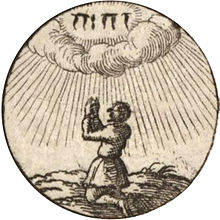
"Scripture does not teach calling on the saints or pleading for assistance from them. For it sets before usa Christ alone as mediator, atoning sacrifice, high priest, and intercessor."—A.C. Article XXI.[38]
In the Lutheran Church, all Christians, whether in Heaven or on Earth, are regarded as saints. Nevertheless, the church building still recognizes and honors specific saints, including some of those recognized by the Catholic Church, only in a qualified way: according to the Augsburg Confession,[39] the term saint is used in the manner of the Cosmic Church but insofar every bit to denote a person who received exceptional grace, was sustained by faith, and whose good works are to be an case to any Christian. Traditional Lutheran belief accounts that prayers to the saints are prohibited, as they are not mediators of redemption.[40] [41] But, Lutherans do believe that saints pray for the Christian Church in general.[42] Philip Melanchthon, the writer of the Apology of the Augsburg Confession, approved honoring the saints past saying they are honored in 3 ways:
- 1. Past thanking God for examples of His mercy;
- two. By using the saints equally examples for strengthening our religion; and
- 3. Past imitating their faith and other virtues.[43] [44] [45]
The Lutheran Churches also have liturgical calendars in which they accolade individuals as saints.
The intercession of saints was criticized in the Augsburg Confession, Article XXI: Of the Worship of the Saints. This criticism was rebutted by the Cosmic side in the Confutatio Augustana,[46] which in turn was rebutted by the Lutheran side in the Apology to the Augsburg Confession.[47]
Methodism [edit]
While Methodists every bit a whole do not venerate saints, they exercise honor and admire them. Methodists believe that all Christians are saints, but mainly use the term to refer to biblical figures, Christian leaders, and martyrs of the faith. Many Methodist churches are named after saints—such as the Twelve Apostles, John Wesley, etc.—although most are named afterwards geographical locations associated with an early on circuit or prominent location. Methodist congregations observe All Saints' Day.[48] Many encourage the report of saints, that is, the biographies of holy people.
The 14th Article of Organized religion in the United Methodist Book of Discipline states:
The Romish doctrine apropos purgatory, pardon, worshiping, and adoration, likewise of images equally of relics, and also invocation of saints, is a addicted matter, vainly invented, and grounded upon no warrant of Scripture, only repugnant to the Give-and-take of God.[49]
Other Protestantism [edit]
In many Protestant churches, the discussion saint is used more by and large to refer to anyone who is a Christian. This is similar in usage to Paul's numerous references in the New Testament of the Bible.[fifty] In this sense, anyone who is within the Body of Christ (i.due east., a professing Christian) is a saint because of their relationship with Christ Jesus. Many Protestants consider intercessory prayers to the saints to be idolatry, since an application of divine worship that should be given merely to God himself is being given to other believers, dead or alive.[51]
Within some Protestant traditions, saint is also used to refer to whatsoever born-again Christian. Many emphasize the traditional New Testament meaning of the word, preferring to write "saint" to refer to whatever believer, in continuity with the doctrine of the priesthood of all believers.
The Church building of Jesus Christ of Latter-day Saints [edit]
The utilise of "saint" inside The Church of Jesus Christ of Latter-day Saints (LDS Church) is similar to the Protestant tradition. In the New Testament, saints are all those who accept entered into the Christian covenant of baptism. The qualification "latter-twenty-four hours" refers to the doctrine that members are living in the latter days earlier the Second Coming of Christ, and is used to distinguish the members of the church, which considers itself the restoration of the ancient Christian church.[52] Members are therefore frequently referred to every bit "Latter-day Saints" or "LDS", and among themselves as "saints".[53]
Other religions [edit]
The use of the term saint is not exclusive to Christianity. In many religions, in that location are people who take been recognized within their tradition as having fulfilled the highest aspirations of religious education. In English language, the term saint is often used to interpret this idea from many world religions. The Jewish hasid or tsaddiq, the Islamic qidees, the Zoroastrian fravashi, the Hindu rsi or guru, the Buddhist arahant or bodhisattva, the Daoist shengren, the Shinto kami, and others have all been referred to as saints.[54]
African diaspora [edit]
Cuban Santería, Haitian Vodou, Trinidad Orisha-Shango, Brazilian Umbanda, Candomblé, and other similar syncretist religions adopted the Catholic saints, or at least the images of the saints, and applied their own spirits/deities to them. They are worshiped in churches (where they announced as saints) and in religious festivals, where they appear as the deities. The proper noun santería was originally a debasing term for those whose worship of saints deviated from Catholic norms.
Buddhism [edit]
Buddhists in both the Theravada and Mahayana traditions hold the Arhats in special esteem, as well every bit highly developed Bodhisattvas.
Tibetan Buddhists concord the tulkus (reincarnates of deceased eminent practitioners) as living saints on globe.[55]
Hinduism [edit]
Hindu saints are those recognized by Hindus as showing a neat degree of holiness and sanctity. Hinduism has a long tradition of stories and poetry nigh saints. There is no formal canonization process in Hinduism, just over time, many men and women have reached the status of saints among their followers and among Hindus in general. Unlike in Christianity, Hinduism does not canonize people equally saints after death, simply they can be accepted equally saints during their lifetime.[56] Hindu saints have often renounced the world, and are variously called gurus, sadhus, rishis, devarishis, rajarshis, saptarishis, brahmarshis, swamis, pundits, purohits, pujaris, acharyas, pravaras, yogis, yoginis, and other names.[57]
Some Hindu saints are given god-like condition, beingness seen as incarnations of Vishnu, Shiva, Devi, and other aspects of the Divine—this tin happen during their lifetimes, or sometimes many years later on their deaths. This explains another common name for Hindu saints: godmen.[58]
Islam [edit]
Besides prophets, according to Islam, saints possess blessings (Arabic:بركة , "baraka") and can perform miracles (Arabic:كرامات, Karāmāt). Saints rank lower than prophets, and they do not intercede for people on the Twenty-four hour period of Judgment. However, both the tombs of prophets and saints are visited frequently (Ziyarat). People would seek the communication of a saint in their quest for spiritual fulfilment. Unlike saints in Christianity, Muslim saints are usually acknowledged informal past consensus of common people, non by scholars. Unlike prophets, women like Rabia of Basra were accepted as saints.[59]
Islam has had a rich history of veneration of saints (frequently called wali, which literally means 'Friend [of God]'),[60] which has declined in some parts of the Islamic world in the twentieth century due to the influence of the diverse streams of Salafism. In Sunni Islam, the veneration of saints became a very common course of devotion early on,[sixty] and saints came to be defined in the eighth-century every bit a group of "special people chosen by God and endowed with infrequent gifts, such equally the ability to work miracles."[61] The classical Sunni scholars came to recognize and honor these individuals every bit venerable people who were both "loved by God and developed a shut relationship of love to Him."[61] "Belief in the miracles of saints (karāmāt al-awliyāʾ) ... [became a] requirement in Sunni Islam [during the classical catamenia],"[62] with even medieval critics of the ubiquitous practise of grave visitation like Ibn Taymiyyah emphatically declaring: "The miracles of saints are absolutely true and correct, and acknowledged by all Muslim scholars. The Quran has pointed to information technology in unlike places, and the sayings of the Prophet take mentioned information technology, and whoever denies the miraculous power of saints are innovators or following innovators."[63] The vast bulk of saints venerated in the classical Sunni world were the Sufis, who were all Sunni mystics who belonged to 1 of the iv orthodox legal schools of Sunni constabulary.[64]
Veneration of saints somewhen became 1 of the virtually widespread Sunni practices for more a millennium, before it was opposed in the twentieth century by the Salafi move, whose diverse streams regard information technology as "being both united nations-Islamic and backwards ... rather than the integral office of Islam which they were for over a millennium."[65] In a manner similar to the Protestant Reformation,[66] the specific traditional practices which Salafism has tried to curtail in both Sunni and Shia contexts include those of the veneration of saints, visiting their graves, seeking their intercession, and honoring their relics. As Christopher Taylor has remarked: "[Throughout Islamic history] a vital dimension of Islamic piety was the veneration of Muslim saints…. [Due, even so to] certain strains of thought within the Islamic tradition itself, particularly pronounced in the nineteenth and the twentieth centuries ... [some mod day] Muslims have either resisted acknowledging the existence of Muslim saints altogether or have viewed their presence and veneration every bit unacceptable deviations."[67]
Judaism [edit]
The term Tzadik 'righteous', and its associated meanings, developed in rabbinic thought from its Talmudic dissimilarity with Hasid 'pious', to its exploration in ethical literature, and its esoteric spiritualisation in Kabbalah. In Hasidic Judaism, the institution of the Tzadik assumed central importance, combining former elite mysticism with social movement for the kickoff time.
Sikhism [edit]
The concept of sant or bhagat is plant in North Indian religious idea including Sikhism, most notably in the Guru Granth Sahib. Figures such every bit Kabir, Ravidas, Namdev, and others are known every bit Sants or Bhagats. The term Sant is applied in the Sikh and related communities to beings that take attained enlightenment through God realization and spiritual spousal relationship with God via repeatedly reciting the name of God (Naam Japo). Countless names of God be. In Sikhism, Naam (spiritual internalization of God's proper name) is commonly attained through the name of Waheguru, which translates to "Wondrous Guru".
Sikhs are encouraged to follow the congregation of a Sant (Sadh Sangat) or "The Company of the Holy". Sants grace the Sadh Sangat with knowledge of the Divine God, and how to take greater steps towards obtaining spiritual enlightenment through Naam. Sants are to be distinguished from "Guru" (such as Guru Nanak) who accept compiled the path to God enlightenment in the Sri Guru Granth Sahib. Gurus are the physical incarnation of God upon World. Sikhism states however, that any beings that take become one with God are considered synonymous with God. As such, the fully realized Sant, Guru, and God are considered 1.[68]
Run across as well [edit]
- Calendar of saints
- Communion of saints
- Congregation for the Causes of Saints
- Hagiography
- Hallow
- Latter Solar day Saint movement
- List of bodhisattvas
- List of canonizations
- List of Christian saints
- List of saints from Africa
- List of American saints and beatified people
- Listing of Breton saints
- List of Canadian Catholic saints
- List of Coptic saints
- List of saints of India
- Listing of saints of the Society of Jesus
- Listing of Russian saints
- List of Hindu gurus and sants
- List of Sufi saints
- Martyrology
- Sage (philosophy)
- Saint Companions
- Secular saint
References [edit]
Citations [edit]
- ^ Woodward, Kenneth 50. (1996). Making Saints. Simon & Sachier. p. 16. ISBN978-0-684-81530-5.
Amid other Christian churches, the Russian Orthodox retains a vigorous devotion to the saints, especially the early church fathers and martyrs. On rare occasions, new names (usually monks or bishops) are grafted onto their traditional list of saints.... Something like the cult continues amidst Anglicans and Lutherans, who maintain feast days and calendars of saints. But while the Anglicans have no mechanism for recognizing new saints, the Lutherans from fourth dimension to fourth dimension exercise informally recommend new names (Da Hammarskjold, Dietrick Bonhoeffer, and Pope John XXIII are recent additions) for thanksgiving and remembrance by the faithful. The saint, then, is a familiar effigy in all globe religions. Just just the Roman Catholic Church has a formal, continuous, and highly rationalized process for 'making' saints.
- ^ a b c Bebis, George (due north.d.). "The Lives of the Saints". Greek Orthodox Archdiocese of America . Retrieved 7 May 2016.
- ^ a b Jones, Lindsay, ed. (2005). "Sainthood". Thomson Gale Encyclopedia of Faith (second ed.). Macmillan. p. 8033.
Historians of religion have liberated the category of sainthood from its narrower Christian associations and have employed the term in a more than general way to refer to the land of special holiness that many religions attribute to certain people. The Jewish hasid or tsaddiq, the Muslim waliy, the Zoroastrian fravashi, the Hindu rsi or guru, the Buddhist arahant or bodhisattva, the Daoist shengren, the Shinto kami and others have all been referred to as saints.
- ^ Gustav, Mensching. "Saint - Encyclopedia Britannica". Encyclopedia Britannica. Retrieved 13 January 2020.
Shintō, the native Japanese religion, is concerned with the veneration of nature and with ancestor worship; it does non take saints according to the standards of ethical perfection or of uncommonly meritorious performance. According to Shintō belief, every person after his decease becomes a kami, a supernatural being who continues to accept a part in the life of the community, nation, and family. Practiced men become skillful and beneficial kamis, bad men become pernicious ones. Existence elevated to the status of a divine being is non a privilege peculiar to those with saintly qualities, for evil men likewise get kamis. At that place are in Shintō, even so, venerated mythical saints—such as Ōkuninushi ("Master of the Smashing Land") and Sukuma-Bikona (a dwarf deity)—who are considered to be the discoverers and patrons of medicine, magic, and the art of brewing rice.
- ^ Ben-Ami, Issachar (1998). Saint Veneration Among the Jews in Morocco. Wayne State University Press. p. 13. ISBN978-0-8143-2198-0 . Retrieved 7 September 2012.
Veneration of saints is a universal phenomenon. All monotheistic and polytheistic creeds contain something of its religious dimension ...
- ^ "Canonization". www.oca.org . Retrieved 19 January 2020.
- ^ "What does the word 'saint' hateful in the Bible?". Retrieved 16 November 2020.
- ^ Coleman, John A. "Conclusion: Afterward sainthood", in Hawley, John Stratton, ed. Saints and Virtues Berkeley: University of California Press, 1987. pp. 214–217. ISBN 0-520-06163-2
- ^ Babb, Lawrence A. "Sathya Sai Baba'south Saintly Play", in Hawley, John Stratton, ed. Saints and Virtues. Berkeley: Academy of California Press, 1987. pp. 168–170. ISBN 0-520-06163-2.
- ^ a b "Gaudete et exsultate: Apostolic Exhortation on the call to holiness in today's globe". Holy Encounter. xix March 2018. Retrieved four May 2018.
- ^ Kevin Cotter. "How Does Someone Become a Saint? A 5-Step Process". focusoncampus, Church . Retrieved 23 September 2017.
- ^ What is a saint? Vatican Data Service, archived from What is a saint? the original on xiii October 1999
- ^ "Catechism of the Catholic Church (Second Edition)". Scborromeo.org. Retrieved 12 October 2013.
- ^ Catechism of the Cosmic Church building Affiliate 2, Commodity 1, 61
- ^ Saint of the Mean solar day, edited by Leonard Foley, OFM, (Cincinnati: St. Anthony Messenger Press, 2003), xvi. ISBN 0-86716-535-9
- ^ The Canon of the Cosmic Church Archived 12 August 2011 at the Wayback Machine, from the Knights of Columbus site
- ^ a b c Luscombe, David and Riley-Smith, Jonathan. 2004. New Cambridge Medieval History: c.1024–c.1198, Volume 5. p. 12.
- ^ a b William Smith, Samuel Cheetham, A Dictionary of Christian Antiquities (Murray, 1875), 283.
- ^ "Alexander III". Saint-mike.org. Retrieved 12 Oct 2013.
- ^ All Well-nigh Saints, "FAQs: Saints and Angels", Catholic Online (USA)
- ^ "Religion: 2,565 Saints". Time. 6 Baronial 1956. Archived from the original on fourteen December 2008. Retrieved 23 May 2010.
- ^ "Keeping Saints Alive". CBS News. 4 Apr 2010.
- ^ Scully, Teresita Do Catholics Worship Mary? on American Cosmic.org
- ^ The Intercession of the Saints Archived xix June 2009 at the Wayback Machine on Cosmic.com
- ^ Patron Saints from Catholic Encyclopedia (1913) on Wikisource.org
- ^ Acts of the Apostles, xix: 11–2
- ^ "Cardinal Newman declared a saint by the Pope". 13 October 2019. Retrieved 19 January 2020.
- ^ Jenna Russell, "Marshfield man'south prayer an answer in sainthood query", The Boston Globe, 28 April 2009, B1, four.
- ^ a b Relics Catholic Encyclopedia on NewAdvent.org
- ^ Table of the Canonizations during the Pontificate of His Holiness John Paul Ii on Vatican.va
- ^ "John Paul Ii Sainthood: iv Steps to Becoming a Cosmic Saint".
- ^ "4 Steps to Becoming a Saint" (PDF).
- ^ a b c d east "The Steps of Canonization". HowStuffWorks. 20 April 2001.
- ^ Frawley J The Glorification of the Saints in the Orthodox Church at Orthodox Church in America, Syosset, New York
- ^ Hopko T "The Orthodox Faith"
- ^ "Article XXII". Eskimo.com. Retrieved 12 October 2013.
- ^ a b Sokol, David F. (2001). The Anglican Prayer Life: Ceum Na Corach', the True Manner. p. 14. ISBN978-0-595-19171-0.
In 1556 Article XXII in part read... "The Romish doctrine concerning...invocation of saints, is a fond thing vainly invented, and grounded upon no warranty of Scripture, merely rather repugnant to the discussion of God." The term "doctrina Romanensium" or Romish doctrine was substituted for the "doctrina scholasticorum" of the doctrine of the schoolhouse authors in 1563 to bring the condemnation upward to engagement subsequent to the Council of Trent. As E.J. Bicknell writes, invocation may mean either of 2 things: the uncomplicated request to a saint for his prayers (intercession), 'ora pro nobis', or a request for some particular benefit. In medieval times the saints had come to be regarded as themselves the authors of blessings. Such a view was condemned but the former was affirmed.
- ^ Augsburg Confession, Article 21, "Of the Worship of the Saints". trans. Kolb, R., Wengert, T., and Arand, C. Minneapolis: Fortress Press, 2000.
- ^ A Confession of Faith Presented in Augsburg by certain Princes and Cities to His Imperial Majesty Charles Five in the Twelvemonth 1530
- ^ Amends of the Augsburg Confession XXI xiv–30
- ^ Smalcald Articles-II 25
- ^ Apology of the Augsburg Confession XXI nine
- ^ Apology of the Augsburg Confession XXI 4–7
- ^ "Lutheran Church building – Missouri Synod – Christian Concordance". lcms.org.
- ^ Augsburg Confession XXI ane
- ^ "1530 Roman Confutation". bookofconcord.org. 28 December 2019.
- ^ Amends to the Augsburg Confession, Article XXI : Of the Invocation of Saints
- ^ "Daily Bible Written report". Methodist Church building in Britain. Retrieved 15 June 2019.
[T]day we reach one of the high points of the Christian Year - All Saints Day.
- ^ The Book of Field of study of the United Methodist Church. Cokesbury. 2016. p. 104. ISBN978-1-501-83321-2.
- ^ "Beloved of God, Called to Be Saints", New Testament Gospel Doctrine Teacher'due south Transmission. The Church of Jesus Christ of Latter-day Saints, Salt Lake Metropolis, Utah. p. 150.
- ^ "The Sin of Idolatry and the Catholic Concept of Iconic Participation". Philvaz.com. Retrieved 25 December 2012.
- ^ Smith, Joseph Jr. "Pearl of Keen Price". Archived from the original on 17 August 2000.
- ^ M. Russell Ballard, "Organized religion, Family, Facts, and Fruits", Ensign, Nov 2007, 25–27
- ^ Lindsay Jones, ed. (2005). Thomson Gale Encyclopedia of Organized religion (in Tajik). Vol. Sainthood (Second ed.). Macmillan Reference The states. p. 8033.
- ^ Ray, Reginald A. "Some Aspects of the Tulku Trrdition in Tibet." The Tibet Journal, vol. xi, no. 4, 1986, pp. 35–69. JSTOR, www.jstor.org/stable/43300222. Accessed xiv Aug. 2021.
- ^ Bhaskarananda, Swami (2002). The Essentials of Hinduism. Seattle: The Vedanta Society of Western Washington. p. 12. ISBN978-1-884852-04-six.
- ^ Robin Rinehart (1 Jan 2004). Contemporary Hinduism: Ritual, Culture, and Practice. ABC-CLIO. pp. 87–90. ISBN978-1-57607-905-8 . Retrieved three June 2013.
- ^ Kenneth L. Woodward (10 July 2001). The Book of Miracles: The Meaning of the Miracle Stories in Christianity, Judaism, Buddhism, Hinduism and Islam. Simon & Schuster. p. 267. ISBN978-0-7432-0029-v . Retrieved 3 June 2013.
- ^ Josef W. Meri The Cult of Saints among Muslims and Jews in Medieval Syria OUP Oxford, 14.11.2002 isbn 9780191554735 pp. 60-81
- ^ a b Run into John Renard, Friends of God: Islamic Images of Piety, Delivery, and Servanthood (Berkeley: Academy of California Press, 2008); Idem., Tales of God Friends: Islamic Hagiography in Translation (Berkeley: Academy of California Press, 2009)
- ^ a b Radtke, B., "Saint", in: Encyclopaedia of the Qurʾān, General Editor: Jane Dammen McAuliffe, Georgetown University, Washington DC.
- ^ Jonathan A.C. Brown, "Faithful Dissenters: Sunni Skepticism about the Miracles of Saints," Periodical of Sufi Studies 1 (2012), p. 123
- ^ Ibn Taymiyyah, Mukhtasar al-Fatawa al-Masriyya (al-Madani Publishing House, 1980), p. 603
- ^ John Renard, Friends of God: Islamic Images of Piety, Delivery, and Servanthood (Berkeley: Academy of California Printing, 2008)
- ^ Juan Eduardo Campo, Encyclopedia of Islam (New York: Infobase Publishing, 2009), p. 600
- ^ Meet Jonathan A.C. Brown, Misquoting Muhammad (London: Oneworld Publications, 2015), p. 254
- ^ Christopher Taylor, In the Vicinity of the Righteous (Leiden: Brill, 1999), pp. 5–6
- ^ Khalsa, Sant Singh (2007). Sri Guru Granth Sahib: English Translation of Sri Guru Granth Sahib. Arizona: Hand Made Books (Mandeep Singh). pp. 12–263.
Sources [edit]
- Beyer, Jürgen, et al., eds. Confessional sanctity (c. 1550 – c. 1800). Mainz: Philipp von Zabern, 2003.
- Bruhn, Siglind. Saints in the Limelight: Representations of the Religious Quest on the Post-1945 Operatic Phase. Hillsdale, New York: Pendragon Press, 2003. ISBN 978-ane-57647-096-1.
- Cunningham, Lawrence S. The Significant of Saints. San Francisco: Harper & Row, 1980.
- Hawley, John Stratton, ed. Saints and Virtues. Berkeley: University of California Printing, 1987. ISBN 0-520-06163-2.
- Hein, David. "Saints: Holy, Not Tame". Sewanee Theological Review 49 (2006): 204–217.
- Jean-Luc Deuffic (ed.), Reliques et sainteté dans l'espace médiéval [1]
- O'Malley, Vincent J. Ordinary Suffering of Extraordinary Saints, 1999. ISBN 0-87973-893-6.
- Perham, Michael. The Communion of Saints. London: Alcuin Club/SPCK, 1980.
- Woodward, Kenneth L. Making Saints. New York: Simon & Schuster, 1996.
Farther reading [edit]
- Gallick, Sarah (2014). 50 Saints Anybody Should Know. Wise Media Group. ASIN B007UI2LDE. Due east-book.
- Hebert, Alber (fifteen October 2004). Saints Who Raised the Expressionless: True Stories of 400 Resurrection Miracles. Illinois: TAN Books. ISBN978-0-89555-798-viii.
- Trigilio, John; Brighenti, Kenneth (2010). Saints for Dummies. ISBN978-0-470-53358-1.
External links [edit]
 | Wikimedia Commons has media related to Saints. |
 | Look up saint in Wiktionary, the free lexicon. |
- Today'southward Saints on the Agenda
- Saints' Books Library
- Orthodox Saints and Martyrs of the Aboriginal Church building
- Saints and Their Legends: A Selection of Saints
- Biographies of Saints and Gurus in the Indian Tradition
- Saints engravings. One-time Masters from the De Verda collection
hernandezlaticureelit.blogspot.com
Source: https://en.wikipedia.org/wiki/Saint
0 Response to "Modern Day Saints Lets Start Again"
Yorum Gönder